

Day 3 of Advent - Luke 3:21-38
In what ways does reflecting on Jesus’ baptism impact the way that you view your baptism?
In Luke 3:21-38, we have the story of Jesus’ baptism followed by a long, detailed list of his ancestry. The genealogy serves as an account to remind Luke’s readers of where Jesus came from. He was of a royal line, tracing back through David himself. Jesus was indeed a Jew who had come to be the Messiah for all of Israel, even the whole world. At His baptism, Jesus hears the words, “You are my Son, my dear Son! I am delighted with you.” This seemingly small confirmation, or encouragement, served as a little bit of a push for Jesus to begin his public ministry. These simple words also pointed in the direction that Jesus’ ministry was going to go. The statement was reminiscent of the words of Isaiah saying that the Messiah would be the servant who would suffer, but would come again. Clearly, the story of the baptism of Jesus is a huge moment in Luke’s Gospel. It shows us where Jesus came from, who he was, and where He was going to go. In our own baptism, His story becomes our own. We, too, receive confirmation from God. We get to look back and see our Spiritual ancestry as we are called children of God.
-In what ways does reflecting on Jesus’ baptism impact the way that you view your baptism?
-In light of this perspective on your baptism, how might this alter the way you consider the spiritual journey ahead of you?
(Written by Cody Poinsett)
Day 2 of Advent - Luke 2:41-52
Searching for Jesus when he’s come up missing. You’ll find him being about the Father’s business.
Luke 2:41-52
In my first few years of ministry, I reached a point in my spiritual walk where I felt like Jesus wasn’t with me. I’ve felt this way a number of times in my spiritual life and it is quite disorienting. At the time, I visited a monastery once a year for a week and was meeting with a monk named Brother Vince. He walked with me for a time on my spiritual journey and often gave me guidance for questions I had. I reached a point where I simply felt like Jesus wasn’t with me and I sought guidance. There were a few things that were remarkable about my exchange with Vince. When I shared with him my frustration and struggle in my spiritual walk, he walked away from me. He left my presence to seek God’s presence on my behalf. In a way, he sought Jesus for me. When he came back 24 hours later, he spoke a simple truth to me that Jesus had kept walking and I went my own way. Sometimes Jesus walks and sometimes Jesus stays. We want the movement of God to be predictable, but we often find Jesus being about his father’s business while we go about our own. Today’s advent text reminds us of this hard truth. Sometimes we carry on in life for a time without realizing we’ve paid no attention to Jesus. We go to look for him in all the wrong place.
God, Father in heaven, give us eyes to see where you are working so that we might be about your business.
Advent
During our series where we talked about habits that shape our heart for God, I came to the realization that our calendars shape us to love and worship things of our culture and society more so than shaping our love and longing for God. Over the years, I’ve been fascinated by the rhythms of the Christian calendar and how it has the potential to guide the hearts of those who pay attention to it. If you’re like me, you probably had no idea that there was a Christian calendar.
During our series where we talked about habits that shape our heart for God, I came to the realization that our calendars shape us to love and worship things of our culture and society more so than shaping our love and longing for God. Over the years, I’ve been fascinated by the rhythms of the Christian calendar and how it has the potential to guide the hearts of those who pay attention to it. If you’re like me, you probably had no idea that there was a Christian calendar.
While the idea of commemorating major Christian days throughout the year may seem foreign, these Christian practices have their roots in the Jewish calendar where they celebrated God’s actions in their history. Jesus participated in these festivals and even recommissioned the Passover feast to be our Lord’s Supper practice. The celebrations of Passover and Pentecost, established by God in the Old Testament, were fulfilled by Christ. The early Christians celebrated the life of Christ with feasts at different points in the year to remind them of the birth, life, death, burial, and resurrection of Jesus. These celebrations create rhythms in life that continually focus our hearts towards God.
Think about the secularization of Christmas. I’m talking about the “Happy Holidays” vs “Merry Christmas” debate per se. What is the major focus for this season? What does that have to do with the birth of Jesus? We don’t know for sure when Jesus was born but Christianity has set aside this time to celebrate the fact that God chose to become like one of us, being born of a woman, becoming an infant, being raised as a child, and showing us what it means to be fully human. God loves us that much that he chose to become like us that we might become like him. Isn’t that worth celebrating?!
Our intention for doing Advent together as a Church is to refocus on what it means to wait on God. Advent is a time of hope, peace, joy, and love. Waiting is hard but the one we wait for is good and just. Our hope is that you will engage in these conversations at home with your kids, together as couples, and with other believers as we go through this season together. This Sunday is the beginning of Advent and Cody will be preaching on hope. Each day of Advent, Cody and I will send out our reflections for each day’s Gospel reading. Each Sunday sermon will be looking forward to the Gospel readings for the days ahead.
Katie provided us with an Advent resource for kids. There will be printed copies available on Sunday or you can print it off by clicking this link.
Cody and I are reading through a daily reflection together by NT Wright called Advent for Everyone: Luke. You can find it here.
I found this blog helpful for understanding the basic layout of the Christians calendar: Click Here
The list of daily Gospel readings can be found here.
Let's Hope Together
We’re in the week of Thanksgiving which brings about a time of reflection of what we’re thankful for. I’m taking a little bit of a different direction this Sunday with Thanksgiving on our minds. When we take time to be thankful, we start to see all of the good around us even amongst the chaos of this world. When I think about the chaos of life and of this world, I’m thankful for something I do not yet have. I’m thankful for God’s redemption and reconciliation of all things. Take a moment to read Romans 8. The future glory of God’s redemption is the hope that we have. All of creation longs for it. They cry out for it. We feel it in our bones every time something tragic happens. We long for God to restore all things back to the goodness he intended for it in the first place. This longing is called “hope.”
We’re in the week of Thanksgiving which brings about a time of reflection of what we’re thankful for. I’m taking a little bit of a different direction this Sunday with Thanksgiving on our minds. When we take time to be thankful, we start to see all of the good around us even amongst the chaos of this world. When I think about the chaos of life and of this world, I’m thankful for something I do not yet have. I’m thankful for God’s redemption and reconciliation of all things. Take a moment to read Romans 8. The future glory of God’s redemption is the hope that we have. All of creation longs for it. They cry out for it. We feel it in our bones every time something tragic happens. We long for God to restore all things back to the goodness he intended for it in the first place. This longing is called “hope.”
What does it mean to hope?
How is hope different from optimism?
Biblical hope focuses on the redemptive actions of God while optimism is about choosing to see, in any situation, how circumstances could work out for the best. Biblical hope doesn’t focus on specific circumstances but on God’s overall redemption. Throughout the Bible, hopeful people often recognize that there’s no evidence that their circumstances are going to change, and things will get better. These people choose to hope anyway because they know that God chose to surprise his people with redemption back in the days of the Exodus, and he could do it again.
Biblical hope comes in a few different words that get translated as with “hope” or “to wait.” As we look back at God’s past faithfulness, we are motivated to hope for the future. This places us in a hard position because we have to wait on God. We are impatient people. We don’t see God acting so we step in and act on God’s behalf. This puts us in a struggle to trust in God. Our ability to wait on God says a lot about how well we believe Romans 8. Do you believe that God is going to restore all things through Jesus Christ? This is the Christian form of Hope. We aren’t just looking back to God’s action in Exodus. We look back to the resurrection where Christ becomes our “living hope” (1 Peter 1:3-12). This hope, according to Paul in Romans 8:20-21, is “that creation itself will be liberated from slavery to corruption into freedom when God’s children are glorified.”
Christian hope is bold. It is a choice to wait for God to bring about a future that’s as surprising as a crucified man rising from the dead. In this time of hope, we look back to the risen Jesus in order to look forward to his coming. So, we wait.
At the beginning of December, we will enter into what Christians have called the season of Advent. The word “Advent” simply means coming or arrival. It is a time of anticipation where Christians have historically taken this time to look back at the Jewish anticipation of the coming Messiah while also looking forward with anticipation to his coming again. This Sunday, I want to give a brief introduction into the season of Advent. Cody and I will post a daily devotional through Advent and we want to invite you into participating together in your home. What does it mean to live in a time of waiting for the coming Christ?
In preparation for Sunday’s sermon, spend some time reflecting on the passages above. The main passage I want you to rest with is Psalm 130. What does it mean to wait? Where are some areas of your life where you are impatient with God’s movement? What does it mean to wait and hope in those spaces? I want to be god in these moments but waiting calls me to relinquish my desire for control and to let God be God.
As we anticipate the coming of Christ, let’s hope together.
Heart Shaping Habit - Gathering Around the Table
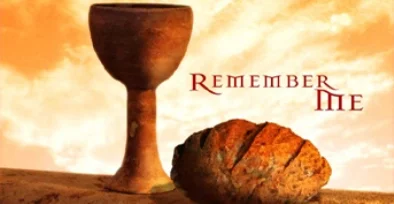
This Sunday we will focus on one of our habits, one of our rituals, which is meant to reorient us, shape our hearts, and transform us. This practice is found at the center of Christian community from the beginnings of the church. Jesus, on the night he was betrayed, took the bread of the Passover feast and told them to take it and proclaimed, “This is my body.” He did the same thing with the cup of wine, “This is my blood.” He took two of the elements from the feast which celebrated God liberating his people from slavery and made a new covenant. We are people of this story. A story much like Israel’s but much bigger. The story we are part of goes back to the beginning and includes God’s people. We take the bread because it is the body of Christ. We take the cup because it is the blood of Christ.
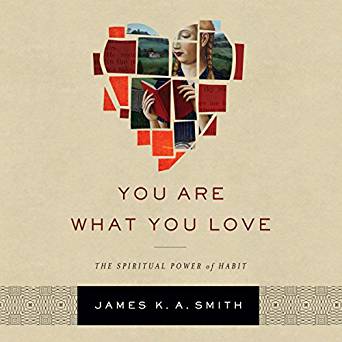
We are worshipping beings. We are all lovers. In short, we are what we love. But what we think we love may not be what we love. When we take time to examine our schedules, our passions, and our habits, we begin to see where the deepest longings of our hearts are. A significant portion of this series of lessons have come out of James K.A. Smith’s book, You Are What You Love. One of the points he makes that has stuck with me for a while is that what we learn is more “caught than taught.” What he means by this is that we have hundreds of things that are shaping our hearts without us knowing it. Images, messages, habits, stories, etc. shape our core beliefs and passions. Most of our childhood is spent in classes receiving information. While receiving this information, “who we are” is shaped by the rituals we regularly participate in. This isn’t much different for adults. We often take for granted what is really shaping who we are.
This Sunday we will focus on one of our habits, one of our rituals, which is meant to reorient us, shape our hearts, and transform us. This practice is found at the center of Christian community from the beginnings of the church. Jesus, on the night he was betrayed, took the bread of the Passover feast and told them to take it and proclaimed, “This is my body.” He did the same thing with the cup of wine, “This is my blood.” He took two of the elements from the feast which celebrated God liberating his people from slavery and made a new covenant. We are people of this story. A story much like Israel’s but much bigger. The story we are part of goes back to the beginning and includes God’s people. We take the bread because it is the body of Christ. We take the cup because it is the blood of Christ.
We struggle with the word “is” here. History has shown lots of debates around whether or not the bread and cup literally become the body and blood of Christ. When we introduce the concept of “literally” we shift the focus from “is.” This IS the body and blood of Christ by faith. Not only is Christ present in the emblems, through faith, but it is God who is the host of the Table who invites us to join him. We all come to the Table by the same grace from the same host. We don’t come to the Table timidly and we shouldn’t come to the Table flippantly. We come to the Table as children who are called home for dinner.
As you prepare for Sunday, I want you to focus on two things: First, what story are you entering into when you participate in the Lord’s Supper? What does this mean for your identity? How does it shape your heart? Second, who invites you to the Table? Who is the host? How do you respond to the presence of God at the Table? Think about who else is at the Table, how are your relationships changed by being in the presence of God together?
Our regular participation in the Lord’s Supper should shape who we are, what we love, what/who we long for, our relationships with one another, and our relationships with those outside of the church. If you were to be intentional with your time around the Table with the Family of God every week, how would your life look different in five years?

Developing the Heart - Wearing Your Father's Clothes
This week as we continue our series on loving God with our emotions, I want to continue to grapple with what Paul says in Colossians 3:1-17. Paul gives two lists that are contrasted between the “Old Self” and “New Clothing.”
This past Sunday, I challenged us to take some time this week to evaluate the habits of our life. This time of examine is to illuminate where your heart is focused. We are all worshipping beings and we worship what we love. The issue is, we might not love what we think we love. There is a Christian practice called “The Examine” which Christians have used in their spiritual lives to open themselves to God for transformation. There are many versions of the Examine but this is the basic practice:
Place yourself in God's presence. Give thanks for God's great love for you.
Pray for God’s grace that you will understand how God is acting in your life.
Think back through your day and recall specific moments and your feelings at the time.
Reflect on what you did, said, or thought in those instances. Were you drawing closer to God, or further away?
Think about your coming day, how will you interact with people as a person who is being transformed into the Image of God? Where will you need God’s help to have peace in times of chaos? Where will you struggle to show grace, peace, and love in your interactions with others? Conclude this prayer asking for God to be present to you in those times that you will be the presence of God to others throughout your day.
I want to offer the spiritual practice of Examine also as a way of examining the habits of our lives to reveal areas where we might not love what we think we love.
This week as we continue our series on loving God with our emotions, I want to continue to grapple with what Paul says in Colossians 3:1-17. Paul gives two lists that are contrasted between the “Old Self” and “New Clothing.”
Think back to when you were a little girl or little boy. Did you ever play dress up with your parent’s clothes? It is cute to see a little girl in her mother’s high heels and oversized hat or a little boy with a suit jacket draped over his shoulders and oversized tie. In Colossians 3:12-14, Paul calls the church to put on God’s clothing. At first the clothes don’t fit. They feel awkward and unnatural to how you typically dress. They may be cute for a moment but when it comes to “real life” we revert back to the clothes that feel more “natural” to us.
We have to grow into these clothes, but it does not happen overnight. Putting on these close takes intentional growth. When you received baptism, you received new clothes to wear. By grace, you were given what is unnatural to the world. This grace gives us the Holy Spirit that brings transformation. To grow into the clothes that don’t seem to fit, you have to make intentional decisions to grow into them. These intentional habits shape us into the people we are called to be.
When we develop habits in our lives to intentionally grow into the clothes we’ve been given, we shape our hearts for God. Pray over the list in Colossians 3:5-8 and ask God to reveal what habits you have in your life that need to be removed. Then pray over the list in 3:12-14 and ask God to reveal what habits you can cultivate to help you grow into the clothes you’ve been given to wear.
Loving God with Your Emotions
We have come to the final instalment of our five-part series of how we express love for God: through Emotions. Some people are wired towards outpouring of emotions. Their natural reaction to everything is going to be deep emotion. If there’s a joyful song, they are most likely dancing, clapping, or raising their hands. In times of lament, they have tears. Emotions pour out of them. This is what I typically think of when thinking about “Loving God through emotions.”
We have come to the final instalment of our five-part series of how we express love for God: through Emotions. Some people are wired towards outpouring of emotions. Their natural reaction to everything is going to be deep emotion. If there’s a joyful song, they are most likely dancing, clapping, or raising their hands. In times of lament, they have tears. Emotions pour out of them. This is what I typically think of when thinking about “Loving God through emotions.”
Throughout this year, I have tried to make the case that we all need to cultivate each of these five ways in our lives. They won’t all develop equally but they all need to be increasing in our lives. I’ve struggled the most with what to do with the topic of loving with our emotions (which is probably why it is our last series). I was introduced to a book a while back that has shaped my thinking about nurturing a heart for worship. You can find it here if you would like to read it (the public library also has it for free electronically).
My intention in this series is not that you become more expressive in worship but that you consider the habits you have in your life and how those habits shape your worship. We are all worshippers. Everyone. We all worship something because we are loving beings. But, you may not love what you think you love. This was a hard concept to swallow.
In the beginning of John’s Gospel, John the Baptist was pointing to Jesus proclaiming him to be the Lamb of God. Hearing his message, two people began to follow Jesus. John 1:38 says that Jesus turned around and saw them following him. He then asks them a question the question I want us to wrestle with over the next few weeks, “What do you want?” This is the first, last, and most fundamental question of discipleship. Interestingly, he doesn’t ask them what they know.
I want to say that my deepest want, my heart’s desire, my love is Jesus Christ. I want to be able to say my deepest longing is for the presence of God. There’s a few lines in this book that brings much of scripture together powerfully where Smith observes, “Your deepest desire is the one manifested by your daily life and habits… Our action, our doing, bubbles up from our loves, which as we’ve observed, are habits we’ve acquired through the practices we’re immersed in.”
What he gets at, which is bringing Jesus’ teaching into focus, is that we are going to worship and love something. Where we focus our worship and love is determined by the regular practices we take part in. We might not even recognize these practices, but they shape the core of our identity. “Above all else, guard your heart, for everything you do flows from it” (Prov. 4:23). Take a moment to think about the regular things you do in your life. What do you watch? What advertisements do you pay attention to? What public voices do you regularly hear? How do you start you day? Etc. How have those things shaped how you view the world and even how they have shaped your desires?
I want to end with an excerpt from the first chapter of this book: “Consider, for example, Paul’s remarkable prayer for the Christians at Philippi in the opening section of his letter to them: “And this is my prayer: that your love may abound more and more in knowledge and depth of insight, so that you may be able to discern what is best and may be pure and blameless for the day of Christ, filled with the fruit of righteousness that comes through Jesus Christ—to the glory and praise of God” (Phil. 1:9–11). Notice the sequence of Paul’s prayer here. If you read it too quickly, you might come away with the impression that Paul is primarily concerned about knowledge. Indeed, at a glance, given our habits of mind, you might think Paul is praying that the Christians in Philippi would deepen their knowledge so that they will know what to love. But look again. In fact, Paul’s prayer is the inverse: he prays that their love might abound more and more because, in some sense, love is the condition for knowledge. It’s not that I know in order to love, but rather: I love in order to know. And if we are going to discern “what is best”—what is “excellent,” what really matters, what is of ultimate importance—Paul tells us that the place to start is by attending to our loves.”
What habits can we adopt in our daily lives and in our regular church gatherings that shape our heart towards God? What regular practices could we adopt that instill our core beliefs within the children we are raising in our church? I look forward to engaging in these discussions together.

Praying Together as One People
Spend some time this week reflecting on the Lord’s Prayer in Matthew 6:5-15 in light of what it means to pray this together as a community. Reflect and meditate on each line and what it tells us about being a Family. When you pray as an individual and pray “our Father” and “forgive us of our sins,” how does this plural prayer change the focus of your prayers?
We’ve been praying together now for over two weeks three times a day. I have been moved watching our Family come together when their alarms go off to join in the Spirit in prayer. One of the major things I’ve learned in this is that when it is time to pray, you stop what you’re doing and pray. This is good rhythm. I’ve enjoyed hearing your stories about what these times of prayer have meant for you. This time of pause and rest to join the church in prayer has been powerful for me. Where I want to take us in our final week on prayer is what it means to pray as a community. When we think of prayer, it is very personal. I believe I’ve often missed the communal nature of prayer because of how personal I have made it. When we come together in prayer through the Spirit, our prayer joins Jesus’ prayer and we pray with the whole communion of saints who have gone before us and join with us in the presence of God the Father.
What does it mean to pray as a community? When we have a congregational prayer, what is happening in the Spirit? What does it mean to pray together when you’re physically alone?
Spend some time this week reflecting on the Lord’s Prayer in Matthew 6:5-15 in light of what it means to pray this together as a community. Reflect and meditate on each line and what it tells us about being a Family. When you pray as an individual and pray “our Father” and “forgive us of our sins,” how does this plural prayer change the focus of your prayers?
“Though we pray in secret, we always pray with others. We pray “our” Father. We are never alone when we pray because we pray as children who have been taught by the Spirit of the Son to cry out “Abba! Father!” (Gal 4:6).” – Stanley Hauerwas
We are part of an ancient Family who comes together into the presence of God to be transformed into his image. Prayer has the power of bringing us together in unity as we continually come together in the Spirit.

Morning Prayer Practice and Resources for Books on Spiritual Life
Yesterday at the end of my sermon, I shared a practice that I have tried to do every day for the last nine months or so that I loosely called “Praying the Senses.” A few people asked me for some details around what I do in that practice, so I thought I would offer it publicly for anyone who wants it. I also had a few people ask for some resources around the presence of God and spiritual disciplines, so I’ll also link a few books that I’ve found helpful at the bottom of this post.
Yesterday at the end of my sermon, I shared a practice that I have tried to do every day for the last nine months or so that I loosely called “Praying the Senses.” A few people asked me for some details around what I do in that practice, so I thought I would offer it publicly for anyone who wants it. I also had a few people ask for some resources around the presence of God and spiritual disciplines, so I’ll also link a few books that I’ve found helpful at the bottom of this post.
As a means for slowing down and recognizing God’s presence in my life, I began this practice or praying over the different parts of my body. This isn’t a formula for righteousness but a practice for opening myself up to God to be examined so that I will be transformed by the image of Christ. I offer this as a guide to be adapted into your life for what your needs are. Please take this and make it your own. Thank you for walking with me on this journey.
I begin my time of prayerful reflection by touching different parts of my face and praying. I typically go in this order but there’s nothing magical about it.
Lips: Open my lips, Lord, and my mouth will declare your praise (Ps 51:15). Make my words your words. Help me to be slow to speak. When I speak, let me offer a kind word, an encouraging word, let me speak grace and peace, but slow my tongue. May the words of my mouth and the meditation of my heart be pleasing in your sight, Lord, my rock, and my Redeemer (Ps 19:14).
Ear: Let me be quick to listen and slow to speak. Let me hear your voice. Help me to hear the words I need to hear and allow the noise of this world to pass, unheard. Help me to hear the voice of those crying out. Help me to be present to those who are speaking to me.
Eyes:Lord, protect my eyes from all impurity. Open my eyes to see the world as you see it and as you desire it to be. Help me to see Christ in the face of those who are hurting. Help me to see Christ in the face of those who despise me, want to harm me, and who do not love me. Help me to see Christ in the face of my enemies that I might long for our redemption together.
Mind:Clear my mind from chatter. Help me to let go of the things I need to let go of. Give rest and peace to my worried and cluttered mind. Lord, give me wisdom that I might walk in your Light.
Body:Make my body an instrument of your grace, peace, and love. I offer to you my body for your service. Continue to wash over me the water of your baptism that I might be made new in your image.
It is in and through Christ that I offer all that I am in prayer. Examine me and reveal to me where I fall short that I might be made new. Amen.
I pray some variation of this prayer along with the Lord’s Prayer most mornings and try to spend some time with each part just resting and listening to what God might reveal in me. I’m hesitant in sharing this publicly because I fail to live up to this prayer daily. We are all on a journey and I want to walk together. Let’s learn from one another and spur one another on towards love and good deeds (Heb. 10:24).
Here are some resources on Spirituality, Spiritual Disciplines, and the Presence of God. Some of these are books I’ve read and re-read. Some are books that I want to read that were recommended to me by mentors of mine. If you have any questions for what you might need to be reading, please email me: ryan@qcchurch.com
Ruth Haley Barton– I’ve read another book by her on Spiritual Disciplines and Leadership. I’ve heard a number of recommendations for these two books. I would love to get a group together to work through “Sacred Rhythms” together. Let me know if you’re interested in doing that.
Sacred Rhythms: Arranging Our Lives for Spiritual Transformation
Invitation to Solitude and Silence: Experiencing God's Transforming Presence
Lee C. Camp – I’ve interacted with this book a number of times in the last decade. Camp is from our fellowship in the Churches of Christ and is a professor at Lipscomb University.
Mere Discipleship: Radical Christianity in a Rebellious World
Richard J. Foster– I had to read “Streams of Living Water” for a class this year and it is excellent! Foster is from the Quaker tradition and has offered a lot in the conversations around spiritual disciplines.
Streams of Living Water: Celebrating the Great Traditions of Christian Faith
Celebration of Discipline: The Path to Spiritual Growth
Thomas R. Kelly– This is on my list to read soon. Kelly is also from the Quaker tradition and has been called one of the greatest thinkers/authors of our day in regard to Spirituality. One of my mentors regards this book as a must read for everyone.
Brother Lawrence– Lawrence is a 17th century monk. This is a short read and very powerful for understanding the presence of God in all of life.
The Practice of the Presence of God
Henri J.M. Nouwen– “The Way of the Heart” was transformative for me early on in ministry. This is the book Cameron was referring to when he spoke Sunday morning. It is a very short and convicting read. I read it once a year for many years and need to get back into that habit. Read anything and everything by Nouwen.
The Way of the Heart: Connecting with God Through Prayer, Wisdom, and Silence
Spiritual Direction: Wisdom for the Long Walk of Faith
Richard Rohr– He is a Franciscan Friar in New Mexico and is one of the best authors and speakers of our day. He’s written a number of books that I need to dig up and add to this list but this one is a good start.
Falling Upward: A Spirituality for the Two Halves of Life
James K.A. Smith– Smith is a Canadian Philosopher whose writing has been influential in my life in recent years for helping me see direction for the church in post-Christian America. I’m actually in the middle of reading this book right now.