
Transformative Prayer
There is a time and place for taking requests to God, offering thanksgiving, etc. What I want to focus on in our discussions about prayer is what it means to place yourself in the presence of God and to listen for his voice in your life. Through those experiences, we slow down, dismantle the business, and find rest. I’ll keep repeating this: It is Jesus’ prayer life that shapes his actions and decisions. What does it look like to allow taking time to slow down and rest in the presence of God to shape different parts of your life?
Prayer is intentionally turning your face towards God. When we seek the presence of God, we allow God’s presence to shape every aspect of our lives that are not fully redeemed. This past Sunday, I focused on the need for times of contemplation. We looked at the pattern shown to us in Luke where Jesus “often went off to lonely places to pray.” This time of solitude and silence provided a prayer life that shaped Jesus’ identity and ministry. His time in the wilderness being tempted by Satan was guided by his prayer life. He was not frantic or chaotic but demonstrated the peace that comes from the presence of God as he responded to Satan’s temptations. I want to develop the discipline to allow my time with God to shape the interior of my life to where I am more sane in what I do.
There is a time and place for taking requests to God, offering thanksgiving, etc. What I want to focus on in our discussions about prayer is what it means to place yourself in the presence of God and to listen for his voice in your life. Through those experiences, we slow down, dismantle the business, and find rest. I’ll keep repeating this: It is Jesus’ prayer life that shapes his actions and decisions. What does it look like to allow taking time to slow down and rest in the presence of God to shape different parts of your life?
When I think about prayer transforming my interior of life, Jesus’ words in Matt 12:43-45 paint a vivid picture of what is at stake. He says, “When an impure spirit comes out of a person, it goes through arid places seeking rest and does not find it. Then it says, ‘I will return to the house I left.’ When it arrives, it finds the house unoccupied, swept clean and put in order. Then it goes and takes with it seven other spirits more wicked than itself, and they go in and live there. And the final condition of that person is worse than the first. That is how it will be with this wicked generation.” When I think about how I have often approached my Christian walk, I have worked really hard to organize my life in such a way that when people look at me, they see someone who “walks the Christian walk.” What they see is a house that is decent and in order. I was baptized. I went to Bible class…to Bible college…etc. I didn’t fall into the “worldly sins” for whatever that is worth. I spoke well and held myself in a way the gained respect. My house was decent and in order.
I remember Jesus’ words in Matthew 12 hitting me with deep conviction. When it comes to organizing your house and dealing with your sin issues, you end up in a worse place than you were before if you organize your life in a decent and orderly way but fail to invite the Holy Spirit to take up residence there. Prayer has a way of exposing the junk in our “house” and inviting God into those spaces to bring transformation. I want you to reflect on this image of the house as we reflect on prayer and prepare for hearing a word from God together on Sunday.
Take some time for reflection:
Turn your phone off, remove all distractions if possible, and take a few minutes to focus on your breathing. If your mind is really busy, just keep repeating, “Lord, have mercy” slowly with each breath.
When you feel like you’ve slowed down, picture a house that represents your life. When you walk into the door, what do you see? Where are the messes in your life? Picture Jesus walking into those spaces and making his home. Hold on to that image and give it to God as a prayer.
Ask God to enter these areas of your life and take up residence there.
When you receive baptism, the Holy Spirit is given to you as a gift (Acts 2:38). The Spirit is a fire that burns within you but has to be tended. Paul’s instruction in 1 Thessalonians 5 is to pray continually (17) and to not quench the Spirit (19). When we intentionally place ourselves in the presence of God, allowing ourselves to be examined, we kindle the Spirits fire in a way that gives warmth to the whole house.
If you want to take this study further, take time to read the Sermon on the Mount (Matt 5-7) with this imagery in mind. Jesus says that he did not come to abolish the law but to fulfill it. He then examines different areas of the law and goes deeper with them to examine the interior of the person. Look at the section on murder in Matt 5:21-26. He moves beyond the fact that you have managed to not murder anyone but then asks how your anger is doing. If you allow your anger to be examined by God, your interior will be transformed and you will be a more peaceful person. People who are at peace at the core of their being find it very difficult to inflict harm on others. The Sermon on the Mount provides a lot of guidance for prayerful reflection to invite the presence of God into areas of your life in need to redemption and transformation.
My prayer for myself, for you, and for our church collectively is that we will be people who continually open ourselves to the presence of God in prayer, continually being redeemed and transformed. I pray that we will be people of peace where the people around us can find refreshment from the chaos of life they live in. Lord, take up residence in us and make us your home.

Praying Like Jesus
For our first section on prayer, I want to follow the beginning of Jesus’ ministry as it is presented in Luke’s Gospel. In chapter three, Jesus receives the Holy Spirit while praying after his baptism. Chapter four takes him into the wilderness for temptation. Following the wilderness and into chapter six, we see Jesus going off to lonely places to pray. Let’s let Jesus’ time in the wilderness set the stage for why we pray. You’re going to hear a lot of voices in life, how will you know which ones to listen to?
As we continue our study on the five different ways of expressing love for God, we move into an area where there is much confusion and misunderstanding: Prayer. There is a lot to say about prayer, but I want to start with a simple definition. At its essence, prayer is intentionally placing yourself in the presence of God. Prayer is more about what you are doing to listen to God rather than what you are saying to God. The presence of God is what guides us. When do you do to bring quiet to your life to rest in the presence of God each day. How might your day look different if you took time to place yourself in the presence of God throughout the day?
For our first section on prayer, I want to follow the beginning of Jesus’ ministry as it is presented in Luke’s Gospel. In chapter three, Jesus receives the Holy Spirit while praying after his baptism. Chapter four takes him into the wilderness for temptation. Following the wilderness and into chapter six, we see Jesus going off to lonely places to pray. Let’s let Jesus’ time in the wilderness set the stage for why we pray. You’re going to hear a lot of voices in life, how will you know which ones to listen to?
Wilderness
Jesus takes on the mission to liberate the world from the powers of darkness, not just Rome and other political powers. How will he defeat Satan himself and bring about redemption? The answer might seem odd, but he does so by defeating him at the most personal and intimate levels. You cannot sacrifice your personal integrity just because the ends of your actions are justifiable. The ends never justify the means. What Satan offers Jesus in the wilderness are easy means to the ends he desires, that Jesus would be glorified, and all creation would bow down to him. Taking the easy road to the right aims in public is the lie that Satan whispers into every person’s ear starting with the lies whispered in the Garden. These voices show up in different ways in your life. How do you listen closely to the voice of God?
The encounter with Satan in the wilderness is an attack on Jesus’ identity as Son of God and embodies the same struggles Israel faced in the wilderness when they too received their sonship from God. Israel struggled with desire for their basic needs, failing to trust in God’s provision, and flirted with idol worship along the way. They would rather have a god they can manipulate rather than the God who created everything. Jesus does not argue with Satan but simply quotes scripture to him. Arguing with temptation is often a way of play with the idea until it becomes too attractive to resist.
Jesus is to become the world’s true Lord, but this path must be accomplished through love and humble service, not the mode of devilish seeking of status and power. The power Jesus does have, he does not use for the display of his own glory but to restore others to life, strength, and back into the community. Jesus’ status as God’s son commits him to the strange path of humility, service, and finally death for all people. The temptations Jesus faced in the wilderness are the same that we face today. The question I want us to wrestle with is, what role does prayer play in Jesus’ life? What do we learn from Jesus about prayer?
In Luke’s Gospel, there is a pattern of prayer that we often miss that I want to work from over the next few weeks. Right now, I just want to point to some passages in Luke 3-6 and give you some things to reflect on as we prepare for Sunday. With the definition of praying being in the presence of God in a posture of listening, what do you hear in these passages?
Pattern of Prayer in Luke:
3:21-22– What happens while Jesus is praying? What does God communicate to him?
4:1-3– Luke is not as explicit as Matthew, but Jesus going without food for 40 days could imply he was fasting. Luke says Satan was tempting him throughout that time. How does prayer aid Jesus in the wilderness?
4:38-44 (42-44)– What does Jesus stop doing in order to go to a solitary place to pray? How does Jesus respond to their desire for him to stay and keep healing people? How does he come to that decision?
Luke 5:12-16 (15-16)– What does Jesus stop doing in order to pray? What do you think he is doing in prayer?
Luke 6:12-13– How does Jesus make the decision of who to choose to make up the chosen twelve? How long does he pray? When you have to make major decisions, what part does prayer play in your decision making? How does resting in God’s presence shape your understanding of prayer in decision making?
Loving God Through Service - Being God's Presence
I want to continue on in Paul’s letter to the church in Ephesus. At the end of chapter 2, Paul says that as fellow citizens of the Kingdom, we are all joined together in Christ to become a holy temple in the Lord (2:19-22). Jews and Gentiles, all people, are reconciled together as one people in Christ. This one new humanity does not ignore the differences between the diverse people groups but celebrates those differences in Christ. We all come to the Table through the same Spirit. We all enter the Kingdom through the same Christ. We all are built together by the same master builder. So, what does it mean to be a holy temple in the Lord?
This past Sunday we started a series on “Loving God Through Service.” This is part of our year-long exploration of “The Five Ways of Loving God.” When it comes to serving God through serving those around you, there are different forms of motivation: This is a command and I don’t want to get in trouble. Or, this is a command and I want to be rewarded. These are two primary ways of thinking when we believe heaven is a reward that is given to us as an end goal to life. Like the young rich man (Mt 19:16; Mk 10:17; Lk 18:18), we ask Jesus what WE must do to inherit eternal life. Jesus’ response to that question is that man can do nothing. Not so with God. All things are possible with God. Only God can bring about reconciliation. In Jesus Christ, God is restoring his creation to the goodness that he intended it to be in the first place. Our motivation for serving is to join God in the redemptive work because we are part of the Kingdom and heaven has already come to us in the Holy Spirit.
As we build on this motivation for serving, I want to continue the imagery of the master stonemason building a great building. In the imagery I borrowed from NT Wright’s book Surprised by Hope, I talked about us being stonemasons working on our own stones, cutting them to be placed in the structure of the building. God prepared work for us to do, and we are his handiwork created in Christ Jesus to do good works (Eph. 2:10). When we work to bring about reconciliation to the brokenness of the world, we do not work in vain because what we do now for the building of the Kingdom, God’s New Creation, God will redeem in the resurrection (1 Cor. 15:58).
Shifting this imagery from being stonemasons working for the master building, I want to continue on in Paul’s letter to the church in Ephesus. At the end of chapter 2, Paul says that as fellow citizens of the Kingdom, we are all joined together in Christ to become a holy temple in the Lord (2:19-22). Jews and Gentiles, all people, are reconciled together as one people in Christ. This one new humanity does not ignore the differences between the diverse people groups but celebrates those differences in Christ. We all come to the Table through the same Spirit. We all enter the Kingdom through the same Christ. We all are built together by the same master builder. So, what does it mean to be a holy temple in the Lord?
I’ve talked about this and written about this a handful of times in my short time with you, but I believe this Biblical narrative needs to be reclaimed by the church, so I’ll continue to come back to it. When God stepped back from his creation at the end of the sixth day, he said it was good and he meant it. God’s presence is in the garden with Adam and Eve. They were co-gardeners with God. All was right in the world. God created the creation to be good. He created humanity to partner with him in tending to this goodness. When the fall of mankind came in Genesis 3, so did the fall of the goodness of creation. Romans 8 talks about the whole creation groaning for redemption. All that is good in this current world is only a glimpse of the goodness that God intended for it.
God gave humanity a vocation, a job, to be co-creators, or co-gardeners, with him. We have neglected our calling to garden because we’ve reached for the fruit that brings us power over creation. We’ve reached for power over others and neglected our calling to garden. When God’s presence was removed from creation because of sin, God did not give up. He did not retreat to the heavens in hopes that we might sort it out on our own and eventually join him on a cloud someday. No, the overarching narrative in scripture is of the God who created the universe continuing to be present to it, though not fully. He elected a people to be the place of his presence so that they might bring his presence to all people.
When they failed to fulfill their vocation as co-workers with God, he came in the form of humanity to show them what a co-gardener looks like. This is the new Adam who came to do what the old Adam failed to do (Romans 5:12-18; 1 Cor. 15:20-26, 45). God’s presence manifested in different ways throughout the First Testament: burning bush, a pillar of cloud/fire, in the holy of holies in the tabernacle and temple. God’s presence came in the form of Jesus with the Holy Spirit resting on him. He replaces the temple as the place where people come to encounter the presence of God (John 2:20-22). When we come together in Christ, through baptism, we receive the Holy Spirit. When Paul says we become a holy temple, he is pointing to the reality of God’s intended creation and what he intends to do with creation. We are the presence of God in this world, as co-gardeners, gardening with God to bring about his New Creation (Rom. 8:18-25; 2 Cor. 5; 2 Peter 3:7-13; Rev. 21:1-5).
God was present in the Temple because the broken world was not ready for his full presence. This is the thin space where heaven and earth come together as it was in the Garden. When Christ came, he empowered us to be the temple in this world, to be that thin space where heaven and earth come together in the Spirit. We live in a state of being already redeemed but not yet fully. We are signposts pointing to what is to come. So, what kind of people should we be? What does this mean for the service that we participate in for redeeming this broken world? What does service look like with this mindset?

Truth - John 18
Truth is a fascinating construct. In a discussion about Jesus’ kingdom being of a different substance than this world, Jesus says, “I came…to testify to the truth. Everyone on the side of truth listens to me.” Pilate’s response of, “What is truth?” can be taken so many ways. From where he stands: on one side he has a mob outside demanding action, on another he has Rome demanding order, and in front of him is a demanding presence. When you’re Pilate in this situation, you might feel powerless while being pulled between the differing truth claims.
What is truth?
I had a long post written when I dove into the different philosophical teachings of truth but didn’t post it. I sat on it for a little bit and decided that I rambled too much and didn’t want anyone to miss the point. So, here’s take two.
Truth is a fascinating construct. In a discussion about Jesus’ kingdom being of a different substance than this world, Jesus says, “I came…to testify to the truth. Everyone on the side of truth listens to me.” Pilate’s response of, “What is truth?” can be taken so many ways. From where he stands: on one side he has a mob outside demanding action, on another he has Rome demanding order, and in front of him is a demanding presence. When you’re Pilate in this situation, you might feel powerless while being pulled between the differing truth claims.
Rome has spread its truth through brutal force and power. They ride in under the banner of Pax Romana(Roman Peace) but if you do not accept their peace they will conquer you with the sword. Truth is in the hands of those with power. Jesus stands before Pilate with the confidence of a greater power and claims that he is on the side of truth. In response to the Jesus’ claims about his kingdom, Pilate appears to shrug and simply ask, “What is truth?”
How does Jesus’ kingdom spread truth differently than the empires? Rome reshaped the world, carving it up with a sword. Jesus had more power than the Roman Empire but didn’t use it to establish his truth. Why? When truth is spread through power and force, how long does it last?
How has Jesus’ kingdom reshaped the world? Has it made it better?
For the last month and a half, we’ve looked at Jesus according to Jesus in hopes of better understanding who we are as those whom Jesus loves. As we wrap up this series, I want to wrestle with what it means to be in God’s Kingdom. Where and when you believe the Kingdom is determines how you live today. Are you trying to live a good enough life to get in the Kingdom later? Or, are you already in the Kingdom because of Christ? If you are waiting for the Kingdom, does that matter to the world around you? If you are already in the Kingdom, how are you to spread truth? Does what you do in this life matter for establishing God’s Kingdom?
I want to leave us with this imagery of how we should look at what we do in God’s Kingdom. If you are a stonemason working with a great architect, you will inevitably work on cutting stones that may be hard to see how they fit into the great scheme of the building. One stone may not seem that important in a structure so large. But, when you step back from it at the end, you see how everything has come together to create such a magnificent building. The lead architect has the entire building in mind when they pass down the instructions for each individual stone that needs to be cut. You follow the instructions given, trusting that the pieces will all fit in the end. What you do in the Kingdom today to follow Jesus in the truth, you are cutting the stones as he has given instruction to make the world as he desires it. The closer you draw to Jesus the clearer the truth is, and you’ll see the world differently. When you see the brokenness of the world, you’ll know what truth will look like in those places and begin to work to bring truth to reality and carve another piece for the Kingdom.
What is truth?

I AM the True Vine - John 15
In John 15, Jesus says, “I AM the true vine, and my Father is the gardener…I AM the vine; you are the branches.” He then invites us to remain in him. To abide in him. To rest in his love. When you know how deeply you are loved, you can do anything. When you know how deeply you are loved, you can endure anything. When you know how deeply you are loved, you have the amazing ability to extend that love to others. When you know how deeply you are loved, you become comfortable in your own skin and transform into the person you are called to be. When you know how deeply you are loved, bask in that love, find peace and joy in that love, you begin to bear fruit.
When was the last time you were deeply in love? What did that feel like for you?
When I go to weddings, I typically look at the groom when the bride is coming down the aisle. Don’t worry, I turn to look at the bride as well. After all, she’s walking really slow so you’ve got time to catch a glimpse of both. The reason I look at the groom, especially if that is his first look, is because there’s an overwhelming emotion of joy. He can’t look anywhere else. He can’t help but smile. Or even cry. When Erin arrived at the aisle, Etta James burst into “At last…my love has come along.” Three years later, my eyes still dampen when I hear that song and think of Erin walking towards me.
I love hearing the stories of parents when they see their child for the first time. The love they never knew they could even feel just grew deeper as they held their newborn. Every new parent has expressed that they didn’t know they could love that much till they held their baby for the first time. I like to remind them that their children will cost about $233,000 to raise to the age of 18 and will be the greatest source of pain they will experience during their teenage years. Nevertheless, people still keep having kids. Why? Love.
Love is powerful.
When you are in love, you can overcome anything. You’re willing to go through anything.
God knew we were going to break his heart when he created us. Why did he do it anyway? Love. Jesus knew he was going to be abandoned and left alone to die but he did it anyway. Why? Love.
In John 15, Jesus says, “I AM the true vine, and my Father is the gardener…I AM the vine; you are the branches.” He then invites us to remain in him. To abide in him. To rest in his love. When you know how deeply you are loved, you can do anything. When you know how deeply you are loved, you can endure anything. When you know how deeply you are loved, you have the amazing ability to extend that love to others. When you know how deeply you are loved, you become comfortable in your own skin and transform into the person you are called to be. When you know how deeply you are loved, bask in that love, find peace and joy in that love, you begin to bear fruit.
When we think about bearing fruit we typically think about evangelism and converting people. I don’t think that’s Jesus’ direct point. What Jesus is saying in John 15 is this: when you know I love you and abide in my love, you will grow more and more into the person you are called to be. This doesn’t stop with you as an individual though. When you grow as the person I’ve called you to be, you’re going to love your Brothers and Sisters in this Family. The world is going to hate you but that’s ok, they hated me first. Just know that my love for you is sufficient. Just in case you need a reminder of my love, I’m sending you the Holy Spirit to dwell in you. Get to know the Spirit and he’ll testify to my love for you.
I want to love Jesus the way that a groom looks at his bride. I want to love Jesus in the way that a parent holds a newborn. I want to have times with Jesus where I walk away knowing that I am deeply loved so that I can then share that love with others. Honestly, I’m not there yet but I want to get there!
What will you do this week to make sure you are connected to the true vine?

I AM the Way, Truth, and Life - John 14
Jesus’ final night begins with washing his disciples’ feet (ch 13), a symbolic action of Jesus’ life purpose: to reveal God’s nature as a being of self-giving love and to become a servant and die for the sins of the world. This points to his command for his disciples to go and do likewise, “love one another as I have loved you” (13:34). His symbolic action is followed by his last words as he tries to prepare them for his coming death. These final words end with the prayer in ch 17.
“I AM the way, the truth, and the life. No one comes to the Father except through me…”
Jesus’ final night begins with washing his disciples’ feet (ch 13), a symbolic action of Jesus’ life purpose: to reveal God’s nature as a being of self-giving love and to become a servant and die for the sins of the world. This points to his command for his disciples to go and do likewise, “love one another as I have loved you” (13:34). His symbolic action is followed by his last words as he tries to prepare them for his coming death. These final words end with the prayer in ch 17.
Can you imagine? You left everything to follow Jesus so that you can help him overthrow Rome and to establish the throne for him. You’re a few years into your time with him and he starts comforting you because he’s going to go get himself killed. You’ve dedicated your life to his mission and now he’s leaving you?! Sometimes, it is easy to think that following Jesus would be easier if we were with him, could see and hear him.
Jesus promises them the Holy Spirit. He even goes as far to say, “It is for your good that I am going away. Unless I go away, the Advocate [Spirit] will not come to you…” (16:7). This whole section (ch 13-17) is about comforting the disciples because Jesus is leaving. The Holy Spirit is promised. Jesus says, “I AM the way and the truth and the life. No one comes to the Father except through me” in response to Thomas’ question about where Jesus is going.
When Jesus says he is the way, we quickly jump to atonement theology and that his death on the cross is what saves us. While this is true, if we only focus on that we will miss the bigger picture of what John is communicating through Jesus’ message. “My Father’s house has many rooms…” (14:2). When Jesus clears the Temple in John 2:13-25, he refers to the Temple as his “Father’s house.” The Temple is the place where heaven and earth come together, where God’s presence is manifested here on earth. It is a glimpse of what God intended creation to be, where his presence was the reality of life. John’s places the story of Jesus clearing the Temple at the beginning of his gospel account so that everything you see Jesus do afterwards is seen through that event. So, how does Jesus cleaning up his “Father’s House” open up how you read John 14:1-31.
Jesus prepares a place where the Temple reality of the presence of God will always be the reality. There’s plenty of room in the presences of God! He has to go prepare this place to bring down to us with his return but till that time, what will he send as a comfort to us? The presence of God in the Holy Spirit! A life led by the Spirit is a life of love following the Way, the Truth, and the Life. What are you doing right now to allow the Holy Spirit to take up residence in you and guide each step you take so that you naturally follow the Way, that you easily sort out the Truth from truth the world offers, and you recognize what has Life in it and you call it forward like Jesus calling Lazarus?
With Jesus’ words in 2:19, “Destroy this Temple, and I will raise it again in three days” read John 13-17 and listen for what God might be telling you.
I AM the Resurrection and the Life - John 11
We are people who live in hope of the resurrection where God will make all things new. We weep with those who weep but our mourning is not forever because Jesus is the Resurrection and the Life.
We’re in John 11 this week. What a remarkable story. As we continue with the “I AM” statements, we see the tension in John bubbling as the authorities in Jerusalem want to kill Jesus. They knew who their messiah was supposed to be, and Jesus wasn’t what they were looking for. “He came to that which was his own, but his own did not receive him” (Jn 1:11). I don’t want to ever becomes too comfortable with my understanding of Jesus that I don’t recognize him when he’s standing in front of me. My prayer for us as a community is that we will always be people who come back to the Bible to make sure we are clear on who Jesus is.
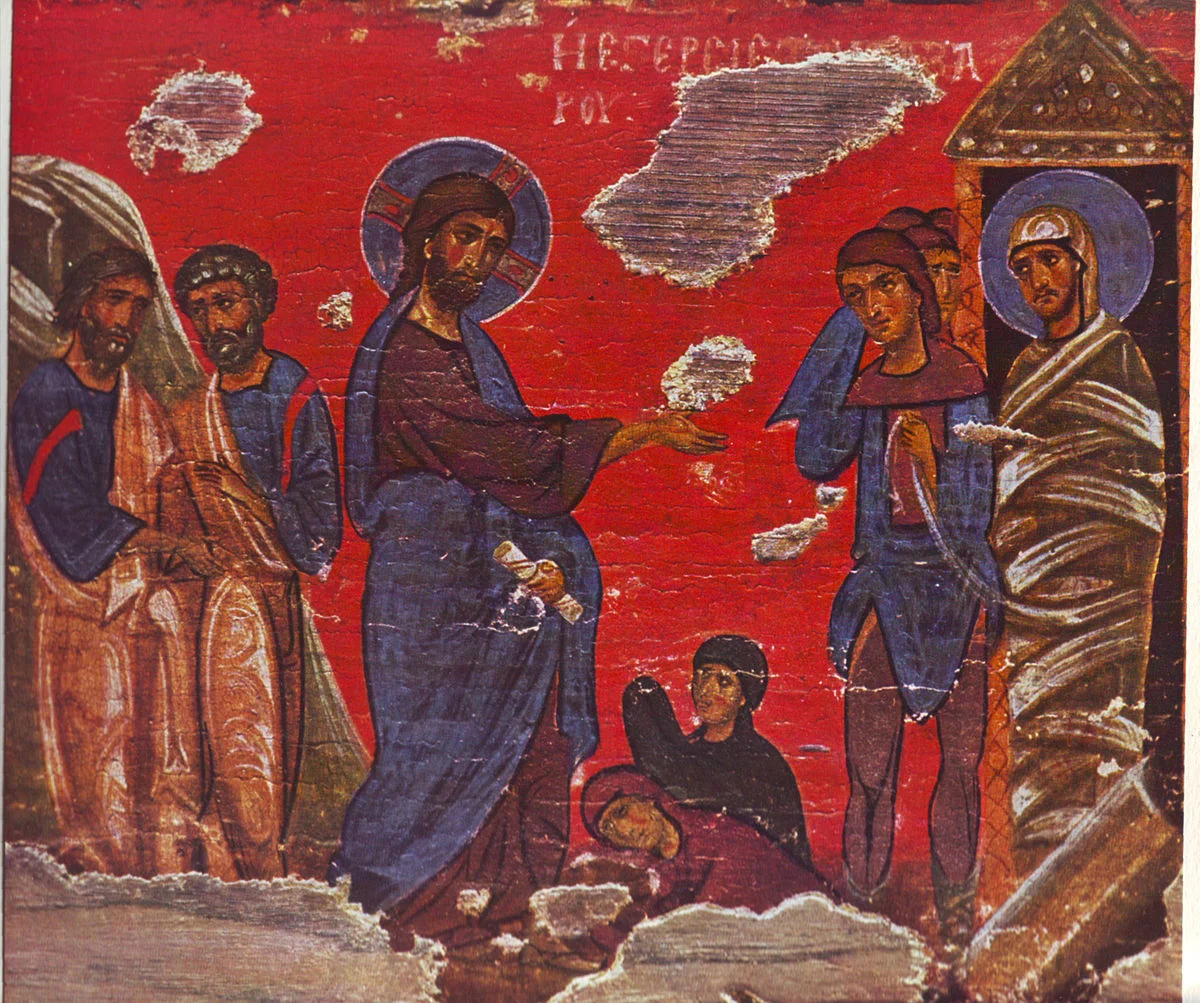
“I AM the resurrection and the life…” This story about Lazarus is beautiful and frustrating all at the same time. I hope you don’t just read John 11 without being moved by it. Slow down your reading and feel the text from deep within you. There’s a meditative reading exercise that I was introduced to years ago. I’m sure it has a name, but I don’t remember it. Read the story in John 11 multiple times over a few days. Each time you read it, focus on a different character in the story. After you’ve read, spend time meditating on the emotions that person might have felt and their thoughts that aren’t shared in the text. Try to put yourself within the narrative in their place to understand the events from their perspective. What emotions do you feel? How does this open up your understanding of what is going on? How do you feel yourself relating to Jesus differently? What do you hear God telling you?
There are a hundred other questions you can ask. I hope you give this a try. I try to let my imagination run a bit. What were Lazarus’ first thoughts when he opened his eyes to see the underside of burial wraps? What did Jesus do for two days while he waited to go to Bethany? What is running through Thomas’ head as he encourages the other disciples that they should all go die with Jesus? How did he reflect back on this moment when Jesus died on the cross? How did this desire to follow Jesus to death then take on new meaning as the Resurrected Christ embraced him?
Jesus’ resurrection changes everything. Like we’ve been saying all along, these “I AM” statements aren’t just nice metaphors for us to have different perspectives on what Jesus thinks about his ministry to the world. These are proclamations that standing before them is God in the flesh, their LORD, and their Savior who came to give them LIFE. There was some debate amongst the Jews when it came to the resurrection at the end of time. The Sadducees didn’t believe in the resurrection. They believed that this life was all you got and then all was done. Most Jews looked forward to the day when God would restore all things, make them new, and bring creation back to the fullness as God created it in the first place. They weren’t looking to escape this creation to have a spiritual existence somewhere beyond the blue.
They believed that when God created the heavens and the earth and called them “Good,” he meant it. God created perfectly, and sin broke it. They believed that in the resurrection, God would restore the brokenness and we would perfectly be with God, in his presence, in the good creation as he intended in the first place. When Jesus says, “I AM the resurrection and the life…” the image in Revelation 21:1-5 should come to mind when Jesus stands up and says, “Behold, I am making all things new!” There’s a lot more to say about the resurrection and I think a lot more should be said about it because we talk more about what happens “to our souls” immediately after death than we talk about what happens to our bodies when the resurrection comes.
So, what happened with Lazarus? Was Lazarus resurrected or resuscitated? He wasn’t the first to be raised from the dead. The widow’s son was raised in Luke 7 and the daughter of Jairus in Luke 8. After Lazarus, Peter raised Dorcas in Acts 9 and Paul raised Eutychus in Acts 20. What do they all have in common? They all died again later. They were all restored to their people for a time, but all died again to then wait for the resurrection to come. The difference between what happened with them and what happened with Jesus is that Jesus came through death and came out on the other side into new life. Not only is he the resurrection, he is the life. What we know now is but a “reflection in a dim mirror; then [when the resurrection comes] we will see face to face. Now I know only in part; then I will know fully…” (1 Cor. 13:12).
We are people who live in hope of the resurrection where God will make all things new. We weep with those who weep but our mourning is not forever because Jesus is the Resurrection and the Life.
I AM the Gate for the Sheep...the Good Shepherd - John 10
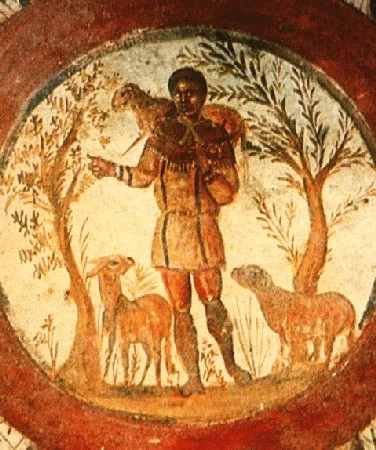
We’re continuing to look at what Jesus says about himself in the “I AM” statements in John’s Gospel. The image I chose for this post is an icon that comes from around the third century. The early Christians, when depicting Jesus, pictured him as the "Good Shepherd" first and foremost. What image do you picture when you think of Jesus? Most Christians probably picture the cross because of what Jesus does for us in our sins. How would picturing Jesus first as the Good Shepherd change how you think about Jesus and your relationship with him?
I AM the gate for the sheep...I AM the good shepherd
We’re continuing to look at what Jesus says about himself in the “I AM” statements in John’s Gospel. The image I chose for this post is an icon that comes from around the third century. The early Christians, when depicting Jesus, pictured him as the "Good Shepherd" first and foremost. What image do you picture when you think of Jesus? Most Christians probably picture the cross because of what Jesus does for us in our sins. How would picturing Jesus first as the Good Shepherd change how you think about Jesus and your relationship with him? Take a moment to read John 10.
The first paragraph of this chapter is a parable (10:1-5). Not surprisingly, Jesus’ hearers did not understand what he tells them. Jesus then adds three layers of explanation: the first is found in 7-10, another in 11-18, and the final explanation is then in 25-30. Ultimately, it is important for all three sections to be read to bring the whole parable together and what Jesus is saying about himself. But, it is also important to read each section as they come.
In chapter 9, remembering that there were no chapter breaks in the original text, the major question that dominated the narrative was whether or not Jesus was the messiah or not. Was he the “son of man” whom God will set as judge over the world? As we transition into ch. 10, Jesus is now talking about sheep and shepherds. What’s the connection?
What kind of imagery would you use for a king of a nation? How would you illustrate a CEO of a company? When we think about rulers, we picture people of power imposing their rule on their subjects. When God talks about himself as the King over his people and when the prophets point to the coming Messiah, who will take his position as King over Israel, they point to the image of the shepherd taking care of sheep. Ezekiel 34:1-16 brings what Jesus is claiming about himself into clearer focus.
The ruler that we have, the King that we bow to, does not look on us as subjects to be manipulated to meet an end goal or increase profits. Our King is one who knows us each by name. He protects to the uttermost. He lays down his life so that we might live. Our King wants to spend time with us so that we might know his voice. What does it mean to you that Jesus wants to know you that well? What does it mean for you that God in the flesh not only allows you to come that close to him but also desires that level of intimacy? What responsibility do you have as sheep in this kind of relationship?
I AM the Light of the World - John 8
Think back to when you were a kid and you were scared of the dark. What was one of the craziest monsters you saw in your room? When you yelled for your parents and they rushed in and turned the light on, what did it end up being? Darkness has a profound way of messing with us. We see things that aren’t there. The nothingness takes control and is given power over us. As soon as the lights come on, the darkness is exposed for what it is: powerless.
Think back to when you were a kid and you were scared of the dark. What was one of the craziest monsters you saw in your room? When you yelled for your parents and they rushed in and turned the light on, what did it end up being? Darkness has a profound way of messing with us. We see things that aren’t there. The nothingness takes control and is given power over us. As soon as the lights come on, the darkness is exposed for what it is: powerless.
It is easy to chuckle at the fears of a child because we have a knowledge that they don’t have. We know there’s nothing in the darkness. What about the darkness around us? I don’t want to downplay the demonic. There are dark forces in this world that take a strong hold over people and even nations. This isn’t as simple for us in the way we look at children. If you go into the darkness of this world, bad things can and will happen to you.
When Jesus says, “I am the light of the world.” He is saying that he intends to illuminate the entire world. His light will reach the darkest corners and reveal those powers for what they really are: powerless.
This illumination brings judgment. These dark powers will be put on trial and exposed. Jesus came to bring judgement but he also came to bring salvation, hope, and life. He came to bring liberation but there are always people who do not want to be liberated. Jesus’ presence as light in the world is not good news for them.
It would seem that in this chapter, Jesus is on trial for his identity. But, we gradually realize that it is in fact not Jesus who is on trial but those who are opposing him. Jesus is exposing their darkness, that they had forgotten who their God really was.
When we look at Jesus, we see the image of God. When we look at Jesus, we see the image we are called to become. This chapter exposes darkness in those who came to question Jesus. Israel was supposed to be a light to the nations. This is why they do not recognize the light. We too are called to be a light to the nations. When we take a good long hard look at Jesus, the darkness is exposed for what it really is: powerless.
Where do you see darkness in your life? Where do you see darkness in the world that seems too overwhelming? When you look at world you are in direct connection with, what would it look like to illuminate those areas with the the light of Christ?