

Loving God Through the Intellect
We are all built in different ways and we celebrate what each person brings to the Table as a Family. As a church, we want to challenge each other and equip each other to grown in all areas of our walk with God. We will spend the next three Sundays focusing on connecting with God through the intellect, through Bible study. For this study, I want to sit with the image of Mary sitting at the feet of Jesus in Luke 10:38-42, in a position of disciple. Jesus commends her for choosing what is better. Let’s sit at the feet of Jesus together.
Earlier in the year, we did a short series on how diverse we all are in how we express love toward God. We are all wired differently and therefore we tend to connect with God in diverse ways. Here are the five basic ways we all connect with God:
Intellect/Study – Time with God through reading and meditating on Scripture. Your natural response to life events is to search scripture for guidance and answers. You feel closest to God during times of deep Bible study, the sharing of intellectually stimulating conversations, and the sharing of ideas about God.
Contemplation/Prayer – Time with God in silence, prayer, meditation, and praying for others. Your natural response to life events is to go to God in prayer. You feel closest to God during long periods of uninterrupted prayer, when you can disconnect from the world and be in God’s presence.
Relational – Time with God through connecting with other people, building community, and seeing Christ in the face of others. Your natural response to life events is to throw a party, get people together, or connect with someone one-on-one. You feel closest to God when you are most connected with the church, after a meal with someone you’ve shared life with through conversation, or when you’re able to step back and see people coming together as a community because you helped them make connections.
Service – Time with God through action where you provide physically for others. Your natural reaction to live events is to get busy taking care of the things that need to be done for other. You feel closest to God when you’re providing for others and taking care of their needs, even if they have no idea it was you who did it.
Emotion – Time with God through worship and emotional experiences. You feel God. Your natural response to life events is deep emotions through song or crying out. You feel closest to God when you’re able to worship freely, express your love and joy through raising your hands or dancing, or be moved to tears in times of lament.
As we strive to be healthy people, we need balance in life. Balance is not having 20% of each of these elements in your life. But, you do need to have each of these to their fullest capacity in your life for how you are wired. I would advocate that each are kept in check and should be increased at different times. I like to think of athletes having different focuses for their workouts. If you are going to be a good sprinter, you still have to have a strong upper body and be able to run 6 miles. A sprinter who doesn’t work on these areas will not have the lungs for multiple races and will not have the arm strength to pump their arms to sprint faster.
We are all built in different ways and we celebrate what each person brings to the Table as a Family. As a church, we want to challenge each other and equip each other to grown in all areas of our walk with God. We will spend the next three Sundays focusing on connecting with God through the intellect, through Bible study. For this study, I want to sit with the image of Mary sitting at the feet of Jesus in Luke 10:38-42, in a position of disciple. Jesus commends her for choosing what is better. Let’s sit at the feet of Jesus together.
To prepare for our first Sunday in this new series, here are some passages to reflect on:
Psalm 1
1 Blessed is the one
who does not walk in step with the wicked
or stand in the way that sinners take
or sit in the company of mockers,
2 but whose delight is in the law of the Lord,
and who meditates on his law day and night.
3 That person is like a tree planted by streams of water,
which yields its fruit in season
and whose leaf does not wither—
whatever they do prospers.
4 Not so the wicked!
They are like chaff
that the wind blows away.
5 Therefore the wicked will not stand in the judgment,
nor sinners in the assembly of the righteous.
6 For the Lord watches over the way of the righteous,
but the way of the wicked leads to destruction.
In what ways do you delight in the law of God?
How does this run counter to the culture we are in?
What promise does David give about those who follow the law of God?
Acts 17:10-11
10 As soon as it was night, the believers sent Paul and Silas away to Berea. On arriving there, they went to the Jewish synagogue. 11 Now the Berean Jews were of more noble character than those in Thessalonica, for they received the message with great eagerness and examined the Scriptures every day to see if what Paul said was true.
What Scriptures did they examine?
Why does examining Scripture make them people of more noble character?
2 Timothy 3:16-17
16 All Scripture is God-breathed and is useful for teaching, rebuking, correcting and training in righteousness, 17 so that the servant of God may be thoroughly equipped for every good work.
What Scripture is Paul referring to when he says this?
Who is Scripture supposed to teach, rebuke, correct, and train in righteousness?
Spend some time reflecting on Psalm 119 and ask God to help you develop this love for his word in your heart.
Psalm 119:97-104
Oh, how I love your law!
I meditate on it all day long.
98 Your commands are always with me
and make me wiser than my enemies.
99 I have more insight than all my teachers,
for I meditate on your statutes.
100 I have more understanding than the elders,
for I obey your precepts.
101 I have kept my feet from every evil path
so that I might obey your word.
102 I have not departed from your laws,
for you yourself have taught me.
103 How sweet are your words to my taste,
sweeter than honey to my mouth!
104 I gain understanding from your precepts;
therefore I hate every wrong path.
105 Your word is a lamp for my feet,
a light on my path.
106 I have taken an oath and confirmed it,
that I will follow your righteous laws.
107 I have suffered much;
preserve my life, Lord, according to your word.
108 Accept, Lord, the willing praise of my mouth,
and teach me your laws.
109 Though I constantly take my life in my hands,
I will not forget your law.
110 The wicked have set a snare for me,
but I have not strayed from your precepts.
111 Your statutes are my heritage forever;
they are the joy of my heart.
112 My heart is set on keeping your decrees
to the very end.

Mother's Day and the Motherly Attributes of God
As we prepare for Sunday, I want us to reflect on the motherly attributes of God. That last sentence may have sounded weird, but we need to continually remember that when God made humanity in His image, he created male and female in His image. All that is male and all that is female is found fully together in the image of God (Gen. 1:26-27). In what ways do you see God showing us the perfection of motherly love?
On Sunday, we celebrate the women in our lives who hold a special title called, Mother. This is a hard day for a lot of people. Some did not have good mothers, some were not able to be mother, and others have had their motherhood rejected by their children. On days like Mother’s Day, I’m reminded of the complexity of issues at hand and our call to be Family to one another. Thankfully, I have an incredible mother who demonstrated the love and servitude of Christ to me every day of my life. Also, thankfully, I have been blessed by so many women in my life who have taken the mantle of mother in my life when I have been geographically far from my own mom. I know a lot of women who hurt on days like Mother’s Day and I want to offer comfort to them while we celebrate our mothers.
Jesus celebrates those who keep God’s word and put them into practice as though they are his Mother and Brothers (Luke 8:21). The church needs to be filled with Mothers in the faith, giving birth to others in the faith who need someone to nurture them and bring them closer to God. I hope that while we lift up our own mothers, we also remember to celebrate those who have birthed Christ into us in our lives. These Mothers of the Faith are the backbone of many churches. I think back to the women, along with my own mother, who birthed Christ into me by their teaching, their example, and their prayers. My prayer for all of the women at Queen City is that they will embrace the role of Mother in the faith for others in their lives.
As we prepare for Sunday, I want us to reflect on the motherly attributes of God. That last sentence may have sounded weird, but we need to continually remember that when God made humanity in His image, he created male and female in His image. All that is male and all that is female is found fully together in the image of God (Gen. 1:26-27). In what ways do you see God showing us the perfection of motherly love? Here are four passages for reflection:
Numbers 11:12 – Moses reminds God that he is the mother of the people he is leading. He is the one who conceived them, gave them birth, and carried them, and nursed them.
Isaiah 66:7–13 – God likens himself as a mother taking care of her children. They will nurse and be satisfied.
John 3:3–8 – Jesus points to imagery that the God the Spirit gives birth to us. Only those who are born by the Spirit (and of water) are able to come into the Kingdom.
1 Peter 2:2–3 – “Like newborn babies, crave pure spiritual milk, so that by it you may grow up in your salvation, now that you have tasted that the Lord is good.”
What do each of these passages tell you about the motherly attributes of God? How does this change the way you view your mother? How does this shape the way you approach motherhood? As newborn babies, what does it look like for us to long for God and taste that the milk he provides is good?
I look forward to seeing you on Sunday as we continue to encourage one another to grow in our walk with God. We are each made in His image, but as we all come together in unity, the image of God comes into clearer focus.
1 Peter 4:1-19 - Life Worthy of Suffering
One of the strangest verses I remember reading as a kid is Acts 5:41-42. The apostles were thrown in jail, rescued by an angel, arrested again and told not to teach in the Name of Christ again. When the apostles said they can only follow the call of God, they were then flogged and released with the order to not teach in the name of Jesus. “The apostles left the Sanhedrin, rejoicing because they had been counted worthy of suffering disgrace for the Name. Day after day, in the temple courts and from house to house, they never stopped teaching and proclaiming the good news that Jesus is the Messiah.”
One of the strangest verses I remember reading as a kid is Acts 5:41-42. The apostles were thrown in jail, rescued by an angel, arrested again and told not to teach in the Name of Christ again. When the apostles said they can only follow the call of God, they were then flogged and released with the order to not teach in the name of Jesus. “The apostles left the Sanhedrin, rejoicing because they had been counted worthy of suffering disgrace for the Name. Day after day, in the temple courts and from house to house, they never stopped teaching and proclaiming the good news that Jesus is the Messiah.”
They rejoiced because “they had been counted worthy of suffering disgrace for the Name.” Coming to our final week in 1 Peter, this picture of Peter rejoicing in his suffering with the other apostles brought life to 1 Peter 4:1-19. Read through this section and as yourself a few questions along the way:
What does it mean to live a life worthy of suffering for doing good?
Thinking about suffering differently: What does suffering have to do with overcoming sin in your life?
What does Peter tell us about judgment?
What does Peter tell us about how we live life together in this text?
Why should you rejoice in suffering?
Why does God’s judgment begin with his household? What does that tell us about why we should live right lives? I want to be mindful here of what we say about God. We don’t like sermons about God’s judgment. Where do you see grace in this?
Peter seems to imply that suffering is part of the Christian walk. Whether it is suffering from those around you or from confronting sin in your own life, suffering will happen. There are a lot of preachers in our culture who present a Christianity that only focuses on the “blessings” that come with being a follower of Christ. They make the Christian walk look easy. 1 Peter 4:14 says that, “If you are insulted because of the name of Christ, you ARE blessed, for the Spirit of glory and of God rests on you.” He doesn’t say you WILL be blessed. He says you ARE blessed. WHAT?! This isn’t the feel-good message that we want to hear. When you know Christ, really know Christ, everything in life is reevaluated. I hear the words of Paul echoing from Philippians 3:10-11, “I want to know Christ—yes, to know the power of his resurrection and participation in his sufferings, becoming like him in his death, and so, somehow, attaining to the resurrection from the dead.”
Lord, help us to live lives worthy of being persecuted.
What is the hope you have?
As you read this week’s section, 1 Peter 3:8-4:11, remember the context of the letter is written to Christians who are undergoing persecution. They are being persecuted because their lives look different than the culture. Their lives are shaped by the death, burial, and resurrection of Christ. They live a life modeled by the love displayed in the death of Christ. They are able to live out this love because of the power found in the Resurrection. In this section, Peter lays out a vision for how we are to live in community.
As you read this week’s section, 1 Peter 3:8-4:11, remember the context of the letter is written to Christians who are undergoing persecution. They are being persecuted because their lives look different than the culture. Their lives are shaped by the death, burial, and resurrection of Christ. They live a life modeled by the love displayed in the death of Christ. They are able to live out this love because of the power found in the Resurrection. In this section, Peter lays out a vision for how we are to live in community.
What does community look like to you based on what you read here?
He then goes on to say that even when we live good lives we will probably still receive some persecution. It’s alright though because we are blessed when that happens. We shouldn’t fear these threats, but we should set apart Christ as Lord in our hearts.
How does revering Christ as Lord in your heart help you undergo persecution?
When this persecution happens, and you respond with kindness and love, people are going to take notice and ask what is wrong with you…or what is right with you. We are to always be prepared to give an answer to everyone who asks you to give the reason for the hope that you have…doing this with gentleness and respect. What I love about this little section is that there is an assumption that when you live a certain way, people are going to ask questions and give you opportunity to share the hope you have.
In what ways have we as Christians given answers to people when no questions have been asked? How would you describe Peter’s model of evangelism in this passage?
Peter then reminds us of the suffering of Christ on the cross, that he suffered once for sins…to bring us to God. Because we are with God, we have special power and position. This power and position allows us to not worry about undergoing persecution because this life isn’t all there is. We live in the body as servants, as those who have already been redeemed. We don’t have to stake our own claim on power but allow God to perfectly be God in his own power. Peter then makes a bizarre statement about Jesus giving proclamation to the imprisoned spirits from the days of Noah. Did Jesus descend into hell? Did he visit hades? What in the (under)world is Peter talking about?
He then points to Noah, the ark, and the water of the flood as symbolic of baptism that now saves us by the resurrection of Jesus Christ. How does baptism fit into this larger conversation about persecution and how we are to live? How does baptism save us? Is it our action in baptism that saves us or God’s action in the resurrection of Christ?
Chapter 3 then ends with the picture of Jesus at God’s right hand with angels, authorities, and powers in submission to him. With this in mind, what do you think Jesus proclaimed to the disobedient spirits? How does this vision of Jesus at the right hand of God give you encouragement to undergo persecution, willingly submit to those with power, and willingly let go of your power so that you might lift others up? How does our baptism shape the way we live our lives?

1 Peter 2:11-3:7 - Live Good Lives Among the Pagans
Read 1 Peter 2:11-3:7 while remembering the context of what Peter is addressing. He is guiding what the life of the Christian looks like while marginalized in society. Peter believes that the death and resurrection of Christ is what our entire life revolves around. Knowing that we are born into a living hope, an inheritance that can never perish, spoil, or fade, how are we to conduct lives alongside non-believing neighbors, bosses, spouses, masters, and governments?
Read 1 Peter 2:11-3:7 while remembering the context of what Peter is addressing. He is guiding what the life of the Christian looks like while marginalized in society. Peter believes that the death and resurrection of Christ is what our entire life revolves around. Knowing that we are born into a living hope, an inheritance that can never perish, spoil, or fade, how are we to conduct lives alongside non-believing neighbors, bosses, spouses, masters, and governments?
The verse that echoes in my mind most days comes from 1 Peter 2:12, “Live such good lives among the pagans that, though they accuse you of doing wrong, they may see your good deeds and glorify God on the day he visits us.” When God comes back in the flesh, in the form of his son, and reveals what his creation is supposed to look like, how will the world respond? Will they say, “Wow! Those Christians were right all along about how life should be lived in community with one another!” or will they say, “Wow! Those Christians sure made a mess of the job they were given to do!”
We often criticize the Jews in the New Testament for missing their calling as the people of God. They were called to be a Holy Nation, a Royal Priesthood, and a light to the nations. They were a Chosen people for this task. When the Word came in the flesh to make his dwelling among them, they did not recognize him because they did not recognize the image of who they were supposed to be in and for the world. We continue to hear God’s call to, “Be holy as I am holy.” If we only strive towards holiness for the sake of the reward we have missed our calling as the people of God. Being Holy as God is holy is to live our lives in such a way that the world begins to reorder and change towards what God intended his world to be in the first place.
There are a lot of verses in this passage that have been used to abuse people or to guilt them to stay in abusive situations. One thing we hate about these passages is that we are called to submission and service while the culture around us calls for power and position. We are called to submit to the emperor. Christians who are enslaved are called to submit to abusive masters. Christian wives are called to submit to nonbelieving husbands. Husbands are then called to not abuse their position in society as the stronger person but to treat their wives as co-heirs. These are hard teachings. Peter is not implementing a patriarchal household and he is not condoning slavery. What he is saying is that when we look through the resurrection at Jesus on the Cross, we reorient our lives to that reality because of our living hope in the resurrection of Jesus Christ from the dead. How does love change how you act within a system? If you have power within the system, what do you do with it? If you are without power, how do you bring transformation with those who do have power? What does love have to do with this? What does our belief that Jesus is Lord have to do with this?
What does it mean to, “live such good lives among the pagans…” here in NoDa? In your neighborhood? With your spouse? With your children? In light of racial tension in our country? In light of political divisions in our country? How might we reorient our lives in these conversations that will point people towards God?
1 Peter 1:13-2:10 – New Family Identity
Peter uses a lot of imagery through this section. I want to point to a few images I’ve often missed while reading this. We have to remember that the Christians in the early church looked to Old Testament Scriptures as their guide for life and understanding of who they were as followers of Christ. In our particular branch of Christianity, the Churches of Christ, we have had a tendency to teach Old Testament stories to kids but then focus on the New Testament alone for how we live our lives. The narrative of the OT shapes much of what is said in the NT and helps bring clarity to who we are as the People of God.
Peter uses a lot of imagery through this section. I want to point to a few images I’ve often missed while reading this. We have to remember that the Christians in the early church looked to Old Testament Scriptures as their guide for life and understanding of who they were as followers of Christ. In our particular branch of Christianity, the Churches of Christ, we have had a tendency to teach Old Testament stories to kids but then focus on the New Testament alone for how we live our lives. The narrative of the OT shapes much of what is said in the NT and helps bring clarity to who we are as the People of God.
Side note: my personal conviction is that any theology, approach to reading the Bible, understanding of who we are, etc. that doesn’t bring the entire view of Scripture into view from Genesis to Revelation, then it should be brought into question. There are a lot of Christian beliefs out there that do not line up with God’s calling of Israel to be a light to the nations and have essentially been condensed down to a personal walk with Jesus and personal salvation.
1:15-16 – References being called by the one who is holy, so be holy, “because I am holy.” This points back to the Hebrews in the Wilderness being called into covenant with God. He gives his list of rules for the covenant and in Leviticus 11:44-45, he calls them to be holy because he is holy. How does this call to holiness shape the way you think about “works based” righteousness? Christ alone makes us righteous. To what extent should you work towards holiness in your life?
1:19 – Peter is pointing to the Gentile Christians being part of the New Exodus and Passover (Ex 12-15). They are redeemed by the ultimate Passover lamb, the blood of Jesus, and not by the worthless idols of their upbringing. The Christians of the time were being persecuted for being different/foreigners/aliens because of how they lived, how does placing their identity in the story of the Passover and Exodus give them hope? In what ways are you placing your identity in manmade things rather than in the story of Passover and Exodus? Make a list of everything that gives you identity. In that list, which things give you hope?
2:1-10 – He uses the imagery of being the New Temple, built on the foundation of Jesus Christ himself (Isaiah 28:16; Psalm 118:22), and a Royal Priesthood, serving God as his representation to the nations (Exodus 19:4-6). Reflect on these two images. What does being “living stones…being built into a spiritual house” mean for your relationship with the church? How well can someone fulfill their calling as a Christian and not be part of the community of believers? How does being a “Royal Priesthood,” shape your understanding of being a Christian? What does this mean for how you live your life and “being holy as I am holy”?
Peter places their suffering within a bran-new story. Narrative shapes how we live our lives. If we allow the narrative of fear to shape our lives, we will do everything we can to protect ourselves and the things we own. If we allow Christ’s narrative to shape our lives, we recognize that Christ has conquered death and what happens to us in this life is not the end or the goal. The world presents a narrative of power and Christ presents a narrative of love and sacrifice. Reaching for power over others when persecution comes is not reaching for the cross. We have to prepare ourselves now for what is to come in our culture next. Will we respond with the love of Christ and holy living as those redeemed by the blood of the lamb or will we fight to keep our position in society?
1 Peter - The Church in Exile
This Sunday, we will begin a new series for the next five weeks on First Peter. This is a relatively short book but is very relevant to life today. I want to encourage you to find a little bit of time to sit down and read all of 1 Peter in one sitting. At the bottom of this page, I have the book broken down into the different sections we will cover each week. Take time to prepare yourself to hear a word from God, ask every question you can think of as you read, and find ways to engage in dialogue with others about what we are studying. Before you sit down and read 1 Peter, I want to make some claims about the text to give it some framework and ask some questions to help you place yourself within the text and place the text within life today.
Sermon Series on 1 Peter
The Church in Exile – Living the Christian Life in a Non-Christian World
This Sunday, we will begin a new series for the next five weeks on First Peter. This is a relatively short book but is very relevant to life today. I want to encourage you to find a little bit of time to sit down and read all of 1 Peter in one sitting. At the bottom of this page, I have the book broken down into the different sections we will cover each week. Take time to prepare yourself to hear a word from God, ask every question you can think of as you read, and find ways to engage in dialogue with others about what we are studying. Before you sit down and read 1 Peter, I want to make some claims about the text to give it some framework and ask some questions to help you place yourself within the text and place the text within life today.
First, I believe that Peter is writing to a predominantly Gentile audience. This is significant because people often depict the church as divided between Peter’s “Jewish Church” and Paul’s “Gentile Church.” I think 1 Peter points us to a more unified church than is often presented. The other interesting thing about Peter writing to Gentile Christians is that he uses very inclusive Jewish language. He calls them a “chosen people, a royal priesthood, a holy nation, God’s special possession…” (2:9) and refers to them as being built into a “spiritual house” (the Temple). In verse 10 he reminds them that they were not a people before but now they are the People of God. What can we learn about inclusiveness in the church today? Who is a group of people that you need to be reminded are part of God’s “chosen people”?
Second, Peter writes to Christians who are being oppressed by society. This oppression isn’t necessarily a violent persecution, but it is probably more along subtle lines. Christians were looked down on, made fun of, ignored in the public circles, and probably even looked over in business. When Christians are persecuted in any way, how should they respond? Christians have often responded in three different ways: Assimilation: start looking like the culture, so you do not stand out; Isolation: withdraw from culture as much as possible to not be influenced by it and to not have to interact with it; Retaliation: fight back against culture to gain some level of power to assure your own security. As you read through 1 Peter, how does he encourage them to respond to a culture who has marginalized them? As Christianity continually comes under scrutiny and we are moved to the margins of our society, how should we as Christians respond?
Finally, Peter addresses how we are to live our lives in proximity to those around us. What does it mean to be a Christian _________ in relationship with non-believers? What does it mean to live in Christian community with other believers as a witness to a non-believing culture? What does that look like for Queen City Church in NoDa?
I hope we discover more of who we are called to be as we work through the book of 1 Peter together. As always, I’d love to hear your questions and reflections on the texts that we are reading together.
Sermon Series Schedule
April 8 – 1:1-12 – Peter Writes to Gentile Christians
Ap. 15 – 1:13-2:10 – New Family Identity
Ap. 22 – 2:11-3:7 – Living Godly Lives in a Pagan Society
Ap. 29 – 3:8-4:11 – Carrying Your Cross & Holding Firm to the Resurrection
May 6 – 4:12-5:14 – Suffering and Future Hope
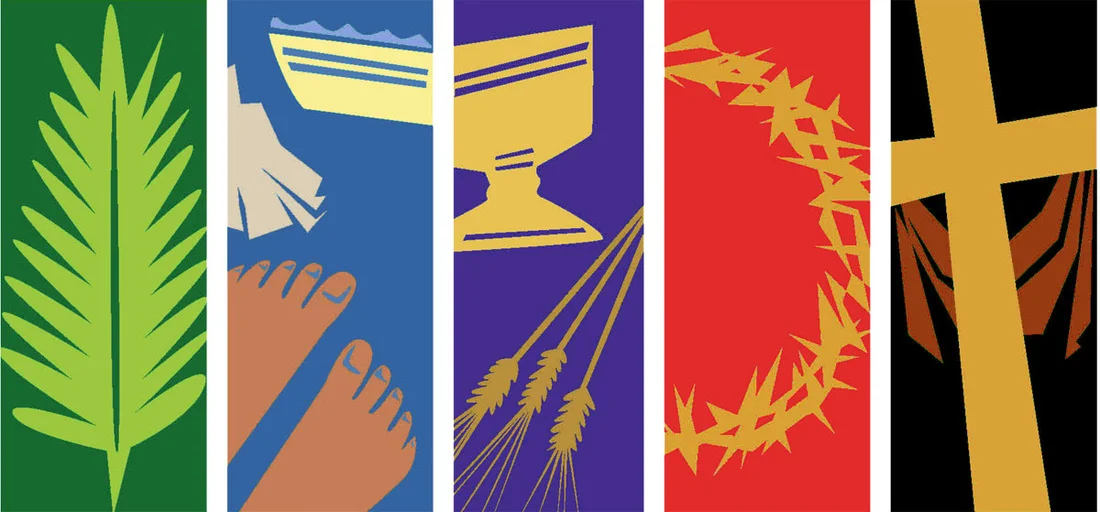
Devotionals for Passion Week
As we prepare for Easter Sunday, here are some daily devotionals for each day leading up to the celebration of the Resurrection.
Passion week
Palm Sunday – Luke 19:28-44 – Triumphant Entry
Sunday marks the day when Jesus rides into Jerusalem a King. Luke’s gospel shows Jesus weeping as everyone shouts for joy. They missed who Jesus was and their vision of what he was doing was too narrow.
Reflection: In what ways have you viewed Jesus too narrowly in the past?
Action: Read through the Gospels and write down the characteristics of Christ.
Monday – Mark 11:12-33 – Cursing the Fig Tree and Cleansing of the Temple
Jesus clears the temple the next day. John’s gospel points to Jesus being the temple. Mark shows that the chief priests and the teachers of the law looked for ways to kill Jesus because of what he did in the temple. The temple had lost its purpose as the place where heaven and earth came together with the presence of God. Jesus calls it a house of prayer for all nation! The temple is supposed to be the place where all people can come to the presence of God (this is the essence of prayer).
Reflection: We, the church, are the temple now. In what ways do we, the church, fail to live up to our calling?
Action: What is one thing you can do to help the church be the church we are supposed to be?
Tuesday – Matthew 23:13-36 – Seven woes on Pharisees
Jesus has spent his ministerial career in the countryside preaching the good news of the Kingdom and is now in the middle of Jerusalem throwing down with the Pharisees. They have spent their time getting everything to look right in order for God’s presence to come back and be with them. The problem Jesus has with them is that while they get everything in order in their lives, their hearts are left unchanged and they are just rearranging chairs on the Titanic. When they convert someone, they have made them twice the child of hell as they are.
Reflection: How much time are you spending on sin management vs time spent in heart transformation?
Action: Create space in your schedule for 5 more minutes of spiritual discipline in your life: read a short passage in the gospels and ask God what you need to hear from it.
Wednesday – Matthew 26:1-16 – Judas agrees to betray Jesus
What are some of the reasons you think Judas betrayed Jesus after following him for as long as he has? All of the apostles haven’t fully understood who Jesus is. They don’t understand till the Resurrection and when the Spirit comes. When it became clear that Jesus wasn’t the Messiah Judas through he should be, did Judas act out of anger? Judas didn’t want the Messiah he had, he wanted the Messiah he wanted.
Reflection: Jesus’ call to all of his disciples is, “Pick up your cross and follow me.” Where are some areas of your life that are hard to crucify?
Action: Read the Sermon on the Mount (Matthew 5-7) like a mirror for your life. Read just one section a day asking the question, “What needs to change in my life to make this true?”
Thursday – John 13 – Celebration of Passover and Jesus washes the Disciples’ feet
This day is often called Maundy Thursday. Maundy means “Command” and is based off of Jesus giving a new command in John 13:34-35, ““A new command I give you: Love one another. As I have loved you, so you must love one another. By this everyone will know that you are my disciples, if you love one another.” Jesus is very calculated with everything he does. Why does he choose to come into Jerusalem to be crucified during the Passover celebration? Why does he establish his new covenant with the Passover meal? This new covenant comes not only with a meal of remembrance but also with an action of service. The way into the new exodus is through lowering yourself to becoming a servant to others.
Reflection: Jesus washed Judas’ feet knowing that he was going to betray him. With that in mind, who is unworthy of your service?
Action: Think of someone you struggle to love and find a way to serve/bless them anonymously over the next month.
Good Friday – John 19 – Jesus is Crucified
Read through this slowly, paying attention to Jesus’ actions and words. What attitude or mood do you see in Jesus? Is he calm? Frantic? Sad? Annoyed? Out of control or in control? As I reflect on the age-old question, “Who crucified Jesus?” John reminds us that no one took Jesus’ life but that he gave it up freely. He knew the Resurrection was coming! That is hope. That is faith. He willingly and faithfully walked into the storm to be peace for the world because he knew where his hope belongs.
Reflection: There are areas of life where chaos reigns more than peace. Those areas of my life are often found in areas that I am trying to control rather than giving them to God.
Action: Place your hands on your lap with your palms up. Close your hands tight. Ask God to reveal areas of your life that you are holding too tightly. As you open your hands slowly, ask God to loosen your grip. When your hands are open, ask God to take control of those areas of your life. Let this be a regular exercise in your life for giving God control so that you might find peace.

Hosanna!
Christians all around the world celebrate this Sunday as, “Palm Sunday.” This is a celebration of the day that the crowds came from Jerusalem to meet Jesus on the road and parade him into the city as their new King. They gave shouts of “Hosanna!” which means, “Save!” while they waved palm branches in triumph and paved the road for his entry into Jerusalem.
Christians all around the world celebrate this Sunday as, “Palm Sunday.” This is a celebration of the day that the crowds came from Jerusalem to meet Jesus on the road and parade him into the city as their new King. They gave shouts of “Hosanna!” which means, “Save!” while they waved palm branches in triumph and paved the road for his entry into Jerusalem. Only five days pass from the people shouting, “Hosanna!” to the crowds shifting their voices to, “Crucify him!” Why does their voice shift so quickly? Interestingly, on the BBC homepage this morning is a Psychology article that peaked my interest, “The Secret Science that Rules Crowds.” I haven’t read it yet but I have always been fascinated with “mob mentality” and how quickly people fall in line with the loudest thing being shouted.
Matthew 21:1-11; Mark 11:1-11; Luke 19:28-44; John 12:12-19
Take some time this week to read one or all of the passages above. Read them slowly, placing yourself in the story. Stand in the position of each character and reflect on everything going on. What is there to celebrate? What is confusing? What makes you weep? What brings you joy?
I’ve found this practice incredibly helpful in my devotional time. It isn’t a time of “study” but a time of reflection and listening. What does God tell you in these moments of reflection? What speaks to me from these stories is the whirlwind of celebration taking place on the road leading into Jerusalem. The people are ecstatic! Jesus’ presence coming to Jerusalem brings all of the celebratory Psalms to the lips of the people. “Hosanna” is the cry of the people but the people have no idea what it will take to bring about true “hosanna.” In the middle of all the celebration is Jesus. He is on a donkey, not a horse. He is a picture of contrast to everything around him. In the middle of all the shouts of acclamation and praise, you have Jesus, weeping over the city (Lk 19:41-44). Hosanna!