
New Heavens and New Earth
When we talk about the Resurrection of Jesus Christ, we have to ask, “What was resurrected?” We’ve been on this journey for a few weeks now as we prepare for Easter, the celebration of the Resurrection of Christ. Paul goes to great lengths in 1 Cor 15 to advocate for the bodily resurrection of Jesus Christ. This is the hope we have! When we think about the afterlife, we often think about our bodies staying in the ground and our souls drifting off to an other-worldly, disembodied existence. Most of these thoughts come from Plato’s teaching and read into the bible rather than being pulled from the bible. In preparation for this week’s sermon, I want to just provide some passages for you to reflect on without me providing much commentary. God created the world, called it good, and made his dwelling among us.
Last Sunday, we looked at Paul’s imagery that Jesus is the “New Adam” ushering in the New Creation. I want to continue to highlight some of the biblical imagery that is being invoked and the overall biblical themes that are being carried through the whole of Scripture.
- When we talk about heaven, we are referring to the reality of the presence of God.
- Going to heaven is to go into the presence of God.
- The Temple is the thin space where heaven and earth come meet.
- The end goal of the Bible is to restore God’s presence fully to his creation.
o One of my favorite quotes on this subject is from a scholar named N.T. Wright, “Heaven is great but it’s not the end of the world!”
- The Jews were so concerned with a worldly kingdom that they were of no good to the world around them.
- Sometimes we are so concerned with an other-worldly kingdom that we are of little or no good to the world around us.
- Jesus taught us to pray for the Kingdom to come here on earth as in heaven.
When we talk about the Resurrection of Jesus Christ, we have to ask, “What was resurrected?” We’ve been on this journey for a few weeks now as we prepare for Easter, the celebration of the Resurrection of Christ. Paul goes to great lengths in 1 Cor 15 to advocate for the bodily resurrection of Jesus Christ. This is the hope we have! When we think about the afterlife, we often think about our bodies staying in the ground and our souls drifting off to an other-worldly, disembodied existence. Most of these thoughts come from Plato’s teaching and read into the bible rather than being pulled from the bible. In preparation for this week’s sermon, I want to just provide some passages for you to reflect on without me providing much commentary. God created the world, called it good, and made his dwelling among us.
- Isaiah 2:2-5
- Isaiah 65:17-25
- 1 Corinthians 15:50-58
- 2 Peter 3:8-18
- Revelation 21:1-5, 9-11, 22-26
- Revelation 22:1-5
The Old Adam and the New Adam
When Paul talks about the Resurrection in 1 Corinthians 15, he solicits imagery that brings the overarching story of the Bible together (1 Cor. 15:20-28). He compares Christ to Adam. Death came through Adam and life comes through Christ. Death came through a man and therefore life must come through a man. Paul isn’t just giving us details as to what happened in the world with two separate events. He is painting a picture of what God intended to do, is doing, and will do in the end. To better understand what God is doing in the Resurrection, we first have to understand what God intended with Adam and Eve. This then sheds light on what our purpose is in Christ.
When Paul talks about the Resurrection in 1 Corinthians 15, he solicits imagery that brings the overarching story of the Bible together (1 Cor. 15:20-28). He compares Christ to Adam. Death came through Adam and life comes through Christ. Death came through a man and therefore life must come through a man. Paul isn’t just giving us details as to what happened in the world with two separate events. He is painting a picture of what God intended to do, is doing, and will do in the end. To better understand what God is doing in the Resurrection, we first have to understand what God intended with Adam and Eve. This then sheds light on what our purpose is in Christ.
Look back to Genesis 1:26-31. God creates Adam and Eve as His image bearers. They are the image of God in the Temple God calls creation (This is why they were to not make an image of God because they were supposed to be the image of God). What does it mean that Adam and Eve were to rule over the creation? What does that rule look like? Did you imagine a ruler like we see in the world around us or a ruler who rules like Christ does?
Mark 10:42-45
“Jesus called them together and said, “You know that those who are regarded as rulers of the Gentiles lord it over them, and their high officials exercise authority over them. Not so with you. Instead, whoever wants to become great among you must be your servant, and whoever wants to be first must be a slave of all. For even the Son of Man did not come to be served, but to serve, and to give his life as a ransom for many.”
God desired Adam and Eve to be co-rulers with him in Creation. Their reign took the form of gardening. Adam and Eve were together with God in the Garden and were co-Gardeners with Him. When He blesses them and tells them to “Be fruitful and increase in number; fill the earth and subdue it” (Gen. 1:28), God intends for them to create and recreate the community that He formed in the Garden. His intention was that the earth would be this perfect community where these image bearers would co-rule with Him over His creation.
When Adam and Eve reached for the Fruit of Knowledge of Good and Evil, they reached for the ability to decipher for themselves what “Good and Evil” were in their own eyes. They wanted independence from God, the one thing they didn’t have in the Garden. The consequence of this action was death. We live within the sins of Adam and Eve because death still reigns. When Paul uses the Old Adam and New Adam imagery in Romans 5:12-21, he points to death’s reign over creation because of the sins of Adam.
When we look at Christ, Paul says we are looking at the New Adam. God made the first Adam a co-ruler over creation and that Adam wanted to be the sole ruler, placing God under his feet. The New Adam is the co-ruler with the Creator and has brought life back into the world. He places all enemies under his feet. The last enemy to be conquered is death. This is our hope. Not our wishful thinking. Hope is assurance. We hope in the Resurrection. We are invited into the New Creation and to be citizens who co-rule with Him. We are the Body of Christ as co-rulers with God. The New Adam will come, He will restore the Creation, bringing the New Garden (2 Peter 3:1-13), and make all things new (Rev. 21:5).
Meaningless of Life if Death is the Final Answer
The Teacher in Ecclesiastes pontificates on the absurdity of life, the meaninglessness of it all. Read Ecc. 1:1-11. The Teacher sets the stage for his sobering book by writing a short poem on how the mountains, rivers, and seas all continue on without us. Ultimately, we all die and that is that. He paints a bleak picture of life, comparing it to a vapor. You can see it, but it is short lives and disappears in a flash. Is life even worth living if everything you accumulate in this life is left waste?
The Wisdom Literature of the Old Testament is a fascinating read. The Proverbs are optimistically written where, in short, if you work hard and do what is right, all will work out for you. The writer of Ecclesiastes then comes along and throws cold water on the whole thing. The Teacher in Ecclesiastes pontificates on the absurdity of life, the meaninglessness of it all. Read Ecc. 1:1-11. The Teacher sets the stage for his sobering book by writing a short poem on how the mountains, rivers, and seas all continue on without us. Ultimately, we all die and that is that. He paints a bleak picture of life, comparing it to a vapor. You can see it, but it is short lives and disappears in a flash. Is life even worth living if everything you accumulate in this life is left waste?
The Christian might respond that in the end there is a reward, so, look forward to that when death comes. The Teacher, in Ecc. 9, shifts focus to the meaninglessness of religion. Those who sacrifice, and those who do not, both end up in the ground. So, “Whatever your hand finds to do, do it with all your might, for in the realm of the dead, where you are going, there is neither working nor planning nor knowledge nor wisdom” (Ecc. 9:10). When you die, you won’t have anything to do anymore so get it all done now.
As we prepare for the Resurrection celebration that comes with Easter, I want you to wrestle with the question of what hope the resurrection actually brings to life today. Not just a future hope, but a very real hope for today. When we talk about our hope as Christians, we often point to Jesus on the cross, dying for our sins. When Paul talks about the Gospel he preached, he points to the resurrection. In my few decades of being in the church, we haven’t talked about the resurrection that much.
As we continue on this journey over the next few weeks, here are some questions to start wrestling with: What will the resurrection be like? What will be resurrected, body or spirit? Where will we go? How does heaven play into this? Where is heaven? What will happen to God’s creation? What was God’s intention for His creation to begin with?
I want to keep coming back to Paul in 1 Corinthians 15. Apparently, there were some in the Corinthian Church who rejected that there was a resurrection of the body. Paul uses a lot of repetition in 1 Cor. 15:12-26. Take a moment to read it slowly, line by line. It is almost as though Paul is in dialogue with the Teacher in Ecclesiastes. Everything in life becomes meaningless when death is the outcome. In the resurrection, Christ has given meaning to everything in this life. He builds on this in v35-58. What hope do you see in this passage? What hope do you see that is more than just having a paradise to rest in when you die?
We live in the hope of the resurrection. This hope gives meaning to everything we do here and now. In the resurrection, all that is of God will be raised and made new. How do you live a life of meaning now because of this hope?

What is the practice of Lent for?
With Ash Wednesday falling on Valentine’s Day and Easter on April Fool’s day, I was joking with one of my Catholic friends what this is an awkward season for them. I’ve always had a deep appreciation for a lot of the Catholic practices and traditions. You’ll find differences in how people explain these practices based on what they understand from their upbringing or what their particular branch of Catholicism practices. With this week being the start of the season of Lent, I thought I’d share some of my thoughts from my understanding of Lent to help you get more out of these practices.
With Ash Wednesday falling on Valentine’s Day and Easter on April Fool’s day, I was joking with one of my Catholic friends what this is an awkward season for them. I’ve always had a deep appreciation for a lot of the Catholic practices and traditions. You’ll find differences in how people explain these practices based on what they understand from their upbringing or what their particular branch of Catholicism practices. With this week being the start of the season of Lent, I thought I’d share some of my thoughts from my understanding of Lent to help you get more out of these practices.
Lent is focused on the 40 days Jesus spent in the wilderness after his baptism and before starting his ministry. These 40 days of fasting and praying helped center his focus on who he is as the Son of God and what his ministry is as the Messiah. Throughout the Gospels, we see Jesus continually going off to solitary places for the purpose of prayer. In short, prayer should shape our lives and center us in our reality of being sons and daughters of God. Lent isn’t just about giving something up as an act of repentance or sacrifice. Lent is about re-centering your life, reminding yourself of who you are and who God is.
Lent begins with Ash Wednesday and runs till Easter Sunday. If you ever stop to count how many days that is, you’ll see that there are more than 40 days. There are six Sundays in Lent before Easter Sunday which has developed a debater of whether or not you get Sundays as “cheat days” to have the things you have given up. There’s a lot of debate around different practices for how people approach Sundays during Lent. Here is my understanding from theology and Church history.
For your own study: Take some time this week to sit and reflect on Romans 5, 2 Corinthians 5, 1 Corinthians 15, and Revelation 21:1-8; 21:22-22:5. What do these passages say about the Resurrection? What will be resurrected? How will our resurrection be like Christ’s resurrection? How have we already received the resurrection? Have we received it fully? What is God’s end game? How does all of this matter for how we live today?
Everything in Lent is building up to the celebration of the Resurrection on Easter Sunday. The Resurrection is the hope that we have in Christ (1 Cor. 15:12-19). Lent begins with Ash Wednesday where the person is reminded of the current state of the world. We have not fully received the Resurrection and the World has not been made new yet. While we are in our current state, we are not fully with God. Ash Wednesday is a day to set your focus on the brokenness of this world and your own brokenness. What you give up for Lent is intended to be a reminder of the brokenness of this creation. When you give up something, you begin to long for it. You desire it. This helps you focus spiritually on the Resurrection, when God will make all things new again (Rev. 21:5).
There is a longing inside each of us for redemption. Each day we are reminded that while we have the Holy Spirit inside of us, we still await fullness (2 Cor. 5). Because we are people who have been reconciled to God, and continue to be reconciled, we also participate with God in bringing about reconciliation to the world around us. The Season of Lent is a season of remembering what God is doing in this broken world through the Resurrection of Jesus Christ.
So, what about the Sundays during Lent debate? We gather together on Sundays (all year) because it is the day of the Resurrection. We celebrate the Resurrection of Christ every Sunday, but Easter is a special Sunday set aside to focus more on the Resurrection of Christ. If Lent is helping you focus on your brokenness and need for redemption, then Sundays are not a “cheat day,” but a day to “Taste and see that the LORD is good…” (Psalm 34:8). When you give up something you love throughout the week and then partake of it on Sunday, you are reminded of the redemption and the goodness that will come in the Resurrection. You taste of it in small amounts each Sunday and then fully restore it back to your life at Easter.
With each disaster, #metoo story, sickness, war, death, etc. that I encounter or read about, I am reminded that this world is not as God desired for it to be. He created a perfect world and sin broke it. We are called to a ministry of reconciliation, to partner with God in righting the wrongs of this world. Lent reminds us of the depravity of this world as we long for the Resurrection.

Balance in Life of Love Toward God
Sunday, we talked about the 5 different ways people connect with God. We would like for you to rank each of these five things from what comes most naturally to you (1) to which is most foreign to you or least natural (5). Click the link below to rank them.
Shema – Deuteronomy 6:4-5
I want to encourage one family unit or person to commit Deuteronomy 6:4-5 to memory to recite it next Sunday morning for the congregation. Please let me know if you are willing to take this on. I’d love to do this periodically throughout the year to encourage each of us to write scripture on our hearts. I think you, your family, and our Family will be incredibly blessed by this practice.
Sunday, we talked about the 5 different ways people connect with God. We would like for you to rank each of these five things from what comes most naturally to you (1) to which is most foreign to you or least natural (5). Click the link at the bottom to rank them.
Here is the link to the 5 Ways of Loving God survey: https://qcchurch.breezechms.com/form/c1a89c
We all love God in different ways that come naturally to us. The Shema prayer that the Jews have prayed for thousands of years in Deuteronomy 6 calls us to obey God is to love God with all that you are. We want to love God with every essence of our being and in doing so, we will continually be transformed into the Daughters and Sons God intends for us to be. The implications of this also have great impact on who we are as a church. When you pursue God in all five of these areas in increasing measure, we believe you will be healthier. We’re going to have different short series on each of the five ways throughout the year and partner each series with practical applications for your life.
We love God with our mind (intellectual), through prayer, relationships with others, with our hands through serving others, and through emotions (worship). Balance in life with God is not having each of these at 20% in your life. Balance in life is to develop all of those ways of loving God to the capacity that you can.
As a Family of believers, we cannot evaluate others spirituality based on how we most naturally connect with God and we cannot evaluate our own spirituality based on what we see as great in someone else. In the same way that if a foot should say, “I do not belong to the body because I am not a hand” (1 Cor 12:15), people who are wired differently in how they express love toward God should not evaluate their spirituality based on how they measure against others. Each part of the body uses their gifts to build the body up and have equal concern for one another (1 Cor. 12:25).
A person who loves God through deep Bible study should not look down on someone’s spirituality because they are more prone to loving God through serving others. We can quickly see where this kind of thinking becomes divisive and doesn’t help anyone grow. If you are naturally a relational person and you see someone not engaging in relationships in the church, find ways to encourage them into developing the relational side of loving God. We need one another, and we must consider how we may spur one another on toward love and good deeds (Heb 10:24-25). Over this next year, let’s help one another find balance in life as we all grow in loving God with all of our heart, soul, strength, and mind.
Here is a rough outline from my Sermon this last week. Use it to reflect on the different ways of loving God. Take some time for self-evaluation as you rank what comes naturally to you. How are you going to work on these different areas this year?
Mind/Intellect -----------------------------------------------------------------------------------------------------
Favorite activity is “Serious Bible Study.” You continually want to learn more about God, the Bible, etc.
The goal is to deepen your Bible study to bring about the renewing of your mind (Rom 12:2)
Acts 2:42 – They devoted themselves to the Apostles’ teaching
Psalm 119:15 – I meditate on your precepts and consider your ways. I delight in your decrees; I will not neglect your word.
2 Timothy 3:16-17 – All Scripture is God-breathed and is useful for teaching, rebuking, correcting and training in righteousness, so that the servant of God[a] may be thoroughly equipped for every good work.
Acts 17 – Berean Jews were more noble than those in Thessaloniki because they studied what Paul said.
Contemplative Christians/Prayer Warriors -------------------------------------------------------------------
You enjoy long walks and talks with God. You desire the peace of the early morning so you can have a good time of prayer. Your first solution to problems that arise is to pray.
Goal: Not so much how do you pray more but how does prayer shape every aspect of your life?
Psalm 1 – Blessed is the one who meditates on the law…
Luke 4:42-44 – He was in a solitary place… he had good ministry in front of him but was in tune with what his purpose was and moved on. How often do we get bogged down doing things that we don’t need to be doing because we don’t have clear discernment of what we need to be doing?
Luke 5:16 – But Jesus often withdrew to lonely places and prayed
Luke 6:12 – Jesus had a big decision to make regarding who he would call as his 12 apostles. In preparation for his big decision, “he went out to the mountainside to pray, and spent the night praying.”
Relational Christians ---------------------------------------------------------------------------------------------
You love God by loving other people. You love to plan group events and you’re continually mindful of what relationships are being built. Your solution to problems are, “Let’s have a party!”
Goal is to connect with other Christians in community
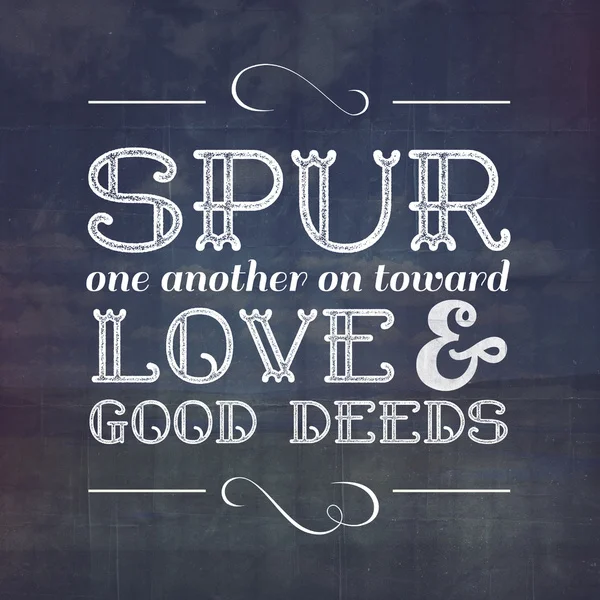
Hebrews 10:24-25 – And let us consider how we may spur one another on toward love and good deeds, not giving up meeting together, as some are in the habit of doing, but encouraging one another—and all the more as you see the Day approaching.
Acts 2:42 – They met together daily and had everything in common.
Service/Hands/Acts of Kindness -------------------------------------------------------------------------------
You are a person who loves God with your hands. You show up in situations and you already know what needs to be taken care of. You bake the pies or mow the lawns. You find great joy in serving others.
The goal is to develop a servant heart in your life.
Ephesians 2:10 – We are God’s handiwork, created in Christ Jesus to do good works, which God prepared in advance for us to do.
Galatians 5:13 – Use your freedom to…serve one another humbly in love
Emotionally/Worship --------------------------------------------------------------------------------------------
You are primarily driven by feeling and tend to be on the enthusiastic side. No one can question whether or not you have joy because you express it often. Long periods of worship excite you and you feel most connected to God.
The goal is to develop a certain level of an outpouring of joy in your life.
Philippians 4:4 – Rejoice in the Lord always
Psalm 150 – Praise the Lord…
Colossians 3:14-17 – Word of Christ dwell in you…singing psalms and hymns and spiritual songs…
Loving God with All that You Are
When Jesus was asked what the greatest command was, he quoted Deuteronomy 6:5,
Love the Lord your God with all your heart and with all of your soul and with all of your mind” (Matt 22:37; Mark 12:30; Luke 10:27). Jesus is quoting from the prayer called the Shema. They pray this prayer every morning and evening, when they leave the house, get home, walking down the road, and some even literally bind it on their foreheads and wrap it around their arms. What does it mean to love God with everything that you are in every capacity?
When Jesus was asked what the greatest command was, he quoted Deuteronomy 6:5,
"Love the Lord your God with all your heart and with all of your soul and with all of your mind” (Matt 22:37; Mark 12:30; Luke 10:27). Jesus is quoting from the prayer called the Shema. They pray this prayer every morning and evening, when they leave the house, get home, walking down the road, and some even literally bind it on their foreheads and wrap it around their arms. What does it mean to love God with everything that you are in every capacity?
We all come to Christ by the same means of grace, but we are all wired differently. Not only do we have different talents used to build up the community (Rom 12; 1 Cor. 12) but we each connect with God in different ways. Our tendency sometimes is to evaluate other’s spirituality based on how we best express our love for God. The beauty of the church is the variety of people we have in it. We all bring something to the table and each encourages the other to grow in areas of spirituality where growth is needed. Take a moment to read Hebrews 10:19-25. We spur one another on towards good deeds. We meet together on a regular basis so that we might encourage one another to love God with all that we are in every capacity in our lives.
Spend some time this week thinking about how love is expressed to God. What does that look like? What does fullness in how love is expressed to God? What does a balanced life look like in expressing love for God? I want to come back to these questions throughout the year in some shorter series but this Sunday I want to talk a bit about what balance of the spiritual life looks like in how we interact with God. Send me some of your responses to these questions. I’d love to hear your feedback!
Luke paints an ideal picture of what the church looks like in Acts 2:42-47. How do you see the early Christians loving God with all of their being? Make a list of what you see in this passage. Examine your own life, where are some areas where you aren’t connecting with God?

Religion That is Pure and Faultless
I was standing outside the other evening when my neighbors got home. They have four children right now. Their two daughters are biological, and their two boys are their boys who have been with them since August through a foster care program. The younger of their two boys came up and gave me a big hug. I helped Devan, my neighbor, take his four kids around trick-or-treating at Halloween while Erin hung out with Allison, handing out candy to kids coming by. Devan and Allison are good people and it warms my heart seeing them interact with their boys. No matter what happens in their lives, Devan and Allison have gifted them with a picture of what family looks and feels like. Their daughters, who treat them like brothers, know a deeper level of love because they have witnessed their parents love others as their own. As I continually witness this beautiful existence from across the yard, I realize the essence of what James is saying in James 1:27.
I was standing outside the other evening when my neighbors got home. They have four children right now. Their two daughters are biological, and their two boys are their boys who have been with them since August through a foster care program. The younger of their two boys came up and gave me a big hug. I helped Devan, my neighbor, take his four kids around trick-or-treating at Halloween while Erin hung out with Allison, handing out candy to kids coming by. Devan and Allison are good people and it warms my heart seeing them interact with their boys. No matter what happens in their lives, Devan and Allison have gifted them with a picture of what family looks and feels like. Their daughters, who treat them like brothers, know a deeper level of love because they have witnessed their parents love others as their own. As I continually witness this beautiful existence from across the yard, I realize the essence of what James is saying in James 1:27,
“Religion that God our Father accepts as pure and faultless is this: to look after orphans and widows in their distress and to keep oneself from being polluted by the world.”
Take a moment to read James 1:22-27. Here are some questions to consider as we prepare for Sunday:
- How is taking care of orphans and widows pure and faultless religion?
- What does this have to do with the heart of the Gospel?
- When James says, “Do not merely listen to the word…do what it says,” what is the word he is speaking about? At this point, the New Testament as we have it, was not yet finished.
- Amos 5:21-24 – The prophet Amos contrasts “religious worship” with “justice” and “righteousness.” What does justice and righteousness have to do with God’s anger towards their worship? What does this have to do with widows and orphans?
Galatians 3:23-4:7
I think this was one of the first passages of Scripture to resonate and transform my thinking about the Christian walk. Early on as a child, I remember looking around at everyone and thinking about how we’re all children of God, no matter where you’ve come from or what you’ve done. I did a short devotional on it in the 5th grade at church camp one summer. Even when I read it now I get a little emotional thinking about God being Father. Not just Father to me, but Father to all of us. There are a few things that need to be pointed out in this passage. The Jews, God’s chosen people, come into Sonship through Jesus in the same way that the Gentiles do. When Paul talks about receiving “adoption to sonship,” he is using the same term used for becoming a full blown Roman citizen, with all of the benefits that comes with it. Just in case we miss it, Paul makes sure we understand what it means to be adopted. We become an heir because we receive the same Spirit as his Son. It is in this adoption that we know what Family feels like and we learn to love like Family because we all came into this Family the same way. Our Father loves us. When we take others into our house of love, they experience the Love of God in a way that leaves a lasting memory as to what Family is supposed to look like. That’s why Jesus says:
“A new command I give you: Love one another. As I have loved you, so you must love one another. By this everyone will know that you are my disciples, if you love one another.” John 13:34-35
The Quality of a Shepherd
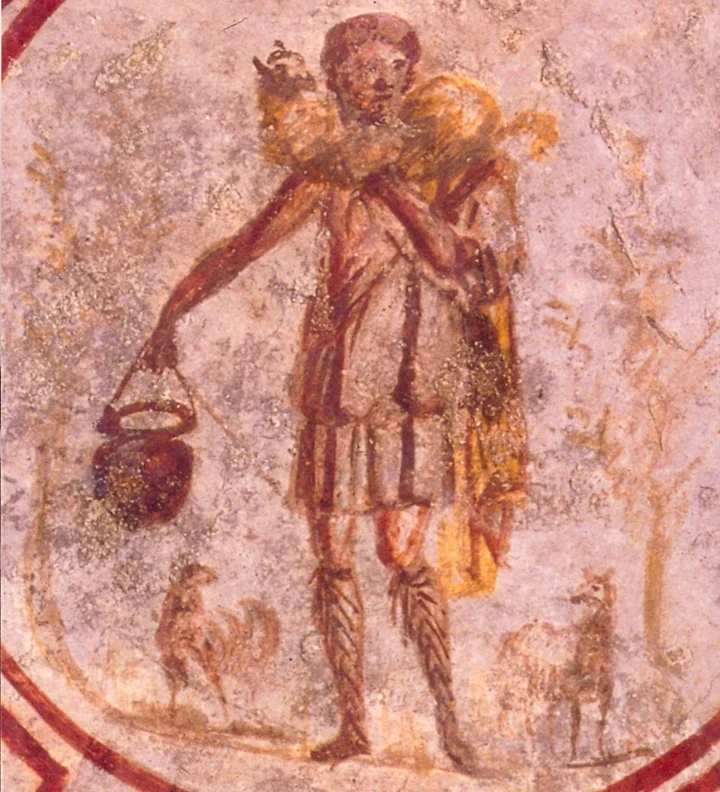
This Sunday, we will look at what the qualities are of being an Elder in the church. We are all called to live as ambassadors of Christ in this world. A leader in the church is someone who embodies what that looks like. My prayer for this Sunday is that we are all open to hearing the call to be transformed into the image of Christ as we examine what a Shepherding Leader is supposed to look like.
We’re in an exciting time as we look to the future of the Queen City Church. We are gaining health as we grow and become more and more like a family. Our partnership with the YMCA is strong and our presence in the NoDa community is continually increasing. As Paul planted churches from city to city, one of the first things he sought to do was the appoint elders in every church as “under-shepherds” of God’s people (Acts 14:23; Titus 1:5). This Sunday, we will look at what the qualities are of being an Elder in the church. We are all called to live as ambassadors of Christ in this world. A leader in the church is someone who embodies what that looks like. My prayer for this Sunday is that we are all open to hearing the call to be transformed into the image of Christ as we examine what a Shepherding Leader is supposed to look like.
Over the last few weeks thinking about this sermon coming up, Psalm 23 has been running through my head.
The Lord is my shepherd, I lack nothing.
He makes me lie down in green pastures,
he leads me beside quiet waters,
he refreshes my soul.
He guides me along the right paths
for his name’s sake.
Even though I walk
through the darkest valley,
I will fear no evil,
for you are with me;
your rod and your staff,
they comfort me.
You prepare a table before me
in the presence of my enemies.
You anoint my head with oil;
my cup overflows.
Surely your goodness and love will follow me
all the days of my life,
and I will dwell in the house of the Lord
forever.
Paul gives lists of qualifications for an Elder in 1 Timothy 3:1-7 and Titus 1:5-9 but these lists are more than just qualities of high moral character. They are the marks of leadership and spiritual maturity. They are marks showing they have weathered the storms and their solid foundations are in God. When I think of the quality of a Shepherd, I always come back to the 23rd Psalm. The picture painted is one of God walked with His sheep, taking them into places of peace where pastures are green and water is plentiful. This psalm doesn’t just paint a picture of peace though. The Good Shepherd also keeps the sheep close during hard times as they walk through dark valleys. The Shepherd does not abandon the flock in their time of need.
Jesus is the Good Shepherd (John 10:1-21). The Shepherd of the Church models their leadership in the image of the Good Shepherd. The Shepherd keeps the flock safe from false teaching but also lays down their lives in the same manner of Christ. The live life shaped by the cross. In the central narrative of Mark’s Gospel (8:22-10:52), Jesus predicts his death three times and each time calls the twelve to pick up their cross and follow him. Mark is laying out a model of what Church leadership looks like through this section. They do not rule like the Gentiles do who lord their authority over their subjects (10:42). When Christ paints a picture of leaders in the church, he says, “Instead, whoever wants to become great among you must be your servant, and whoever wants to be first must be slave of all. For even the Son of Man did not come to be served, but to serve, and to give his life as a ransom for many” (10:43-45).
While these passages point to the leaders of the church, they are the call of every Christian to be shaped by the cross into the image of Christ. The only way we become a healthy Family of God is when we allow Christ to be the Head and we properly become the Body of Christ and move and function as he did. We are called to be the living sacrifice for this world to know God.
The Way of Love
We are part of a Family where we both receive from one another as well as give. No one is above receiving and no one is below giving. All of us have gifts worth giving as we strengthen the body of Christ. We focused this last week on Romans 12 and I want to come back to “Love in Action” (12:9-21) this coming Sunday.
Thank you for being flexible this past week. The Y is working diligently to get the heater fixed in the gym. Sunday’s intimate setting for worship in The Hut provided for a beautiful worship service and a wonderful time together. Thank you again for being such a great Family. I’m excited for everything 2018 has in store for us as we grow as a community. We are part of a Family where we both receive from one another as well as give. No one is above receiving and no one is below giving. All of us have gifts worth giving as we strengthen the body of Christ. We focused this last week on Romans 12 and I want to come back to “Love in Action” (12:9-21) this coming Sunday.
Paul uses the same imagery in 1 Corinthians 12-13 as well. What does it mean to love in a community like the church? How does love shape who we are? How does our measurement of love differ from the rest of the world?
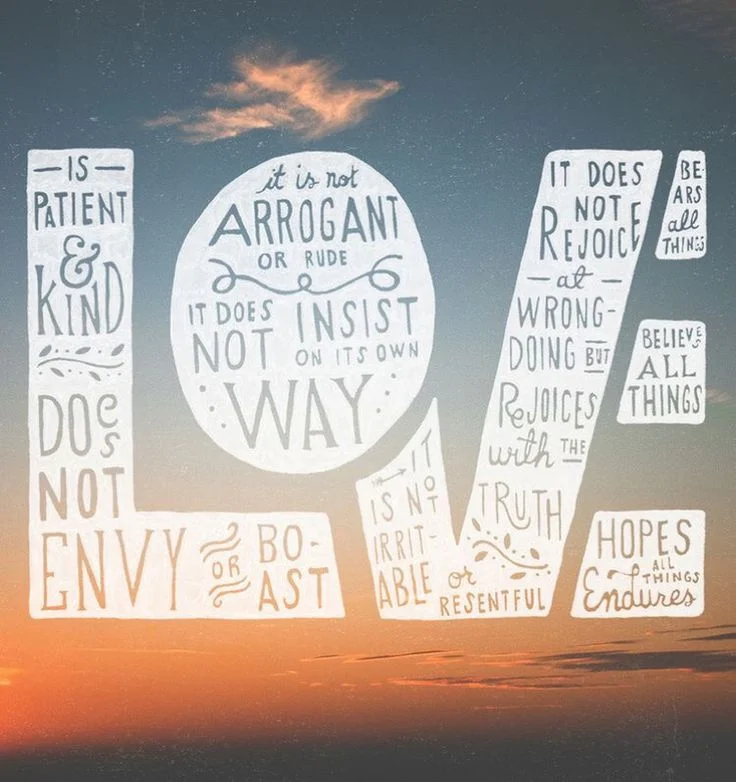
Take time to read Romans 12:9-21 again and we’re going to reflect on 1 Cor. 13. Paul begins with, “And yet I will show you the most excellent way” and then goes into his discourse on love. Think about what you’ve done today. What is something that you did that wasn’t in love? There are a lot of things that I do that I don’t think about whether or not it was measured in love or not. How do you allow love to guide your decisions each day?
13:1-3 holds a person’s gifts against the measure of love. When have you had someone do something nice or good but love was lacking? Have you ever received a simple gift from someone but knew the gift was filled with love? How was that gift different than something of higher monetary value? How can you give your gifts in the church that are filled with love?
13:4-8a is often read at weddings to focus the love of a bride and groom. While that is a beautiful notion and a great guide for marital life, Paul has placed this at the climax of his discourse of what it means to be a church Family. How are you doing with this list? Where are some areas where love needs to reign in your life in the Church? When we come around the Table together for the Lord’s Supper, how could this list refocus your life on what Jesus did on the cross and how you are to live in community with others? Love never fails.
13:8-13 – All of our gifts are given for a short while to build up the community. There will come a time when those gifts will no longer be needed because all will be redeemed and made new. What will be left? Love. If love is what will be left in the end, why do we struggle to find love for others now? Where are areas in your life where love isn’t your guide? Pray for transformation. Right now we do not see the redemption of Christ fully. We only know it in part but we will know if fully, when we are fully known. The church is a microcosm of what God will bring in redemption. The love you give and experience in this life is only a glimpse of the love that defines God. The way we love one another is a signpost pointing to the love of God. How will you point people to God today?