

The Beginning of the End - Chapter 16
“We have to remind ourselves that these stories are not merely contemporary newspaper reports or journal entries. They are more like a memoir in which someone reflects with the benefit of some distancing on the significance of their experience.” - John Goldingay
One of my favorite Old Testament Theologians, John Goldingay, once said, “We have to remind ourselves that these stories are not merely contemporary newspaper reports or journal entries. They are more like a memoir in which someone reflects with the benefit of some distancing on the significance of their experience.” This section of Kings is written like Judah’s later reflection on the life of Israel. It is concerned with Israel’s story (in the North) in order to discover what Judah needs to learn for its own life (in the South). Eventually, both kingdoms come to the same fate under exile from Assyria and Babylon. It is easy to read these stories as a lesson in history to know what happened. It is important that we read these stories as a mirror into our own lives. I haven’t set up golden calves for Baal worship or made alliances with foreign nations but what do these stories tell me about the church’s relationship with God today? As you read these stories, what do you learn about yourself?
I hope you pay attention to Hezekiah. He does some amazing things in his reign as king. He makes major reform in Judah in attempts to bring people back to God. He shuts down the high places and destroys the pillars associated with Canaanite-style worship. Remember the bronze snake in Numbers 21? It is called the Asherah pole. God had Moses set it up so that the people could look on it and find healing. God gave it as a sacrament of healing but the people started worshipping it. Hezekiah tore it down. Is there anything that God has given us that was intended to give us healing but we have started worshipping it as though it were God?
I’m going to keep my reflections short and end with one last image of Hezekiah. In 2 Kings 19:14-19, Hezekiah receives a letter from the messengers. Upon reading it, he then takes it to the house of the LORD and spreads it out before the LORD. What a beautiful image of prayer. We have a tendency to say, “When all else fails, pray.” Prayer is the first thing Hezekiah does. He doesn’t way his options and then decides that prayer is his best option. When you receive bad news, what is the first thing you do? How would your life be different if you took your “letter” and laid it out before God and said a prayer like this: God in heaven. You are LORD over everything, especially this situation. Father, look at this, listen to your Children, and deliver us from this situation. LORD, when you deliver us from this situation, you will proclaim to the whole world that you are LORD, the One True God!
If I’m honest with you (and I hope I always am), this kind of prayer scares me. It takes control out of my hand and puts it in the hands of God. It scares me because God might not respond how I’d like him to. It scares me because I often feel like the father in Mark 9:24 when Jesus says, “Everything is possible for one who believes.” And the boy’s father exclaimed, “I do believe; help me overcome my unbelief!” Maybe we need to start with prayers asking God to help us overcome our unbelief. I find myself praying this more and more often.

God's Messengers - Chapter 15
I don’t want to give everything away from this text but there is great imagery taking place. Elijah has left the Promised Land to go to the desert. God provides for him what he needs. It takes him 40 days/nights (getting it yet?). Finally, he arrives where? Horeb (Sinai), the Mountain of God. Elijah just reversed the story of Israel, moving from Promised Land to covenant mountain.
There are a lot of great stories in this week’s reading. I remember my childhood imagination dancing as I stood next to Elisha’s servant looking to the hills filled with an army of fire! What a great story! I’ve echoed Elisha’s assurance in my mind over the years, “Those who are with us are more than those who are with them.” You have the lepers in 2 Kings 7 (not in this week’s reading but from this section of scripture) who take a chance to survive and walk into the Syrian camp to see if they can get some food. When they get there, they find that God scared them all away! They had food and riches at their disposal but they quickly realized that this good news must be shared with everyone. That’ll preach! My favorite story of all is the story that builds up to what I want to focus my sermon on this week. Mount Carmel is one of the all-time greats! And…it is one of the few occurrences of “prophetic trash talking.”
The story I want to focus on this week is the one that comes immediately after the victory at Mount Carmel. Take a moment to read these two stories together: 1 Kings 18:16-19:18.
- Why is Elijah running?
- Does he have any reason to be running?
- What direction is he running? Horeb is also called “Sinai”
- What is God doing for Elijah while he’s running? How is Elijah’s response to the angel different than everyone else’s in scripture?
- Why does Elijah go to Horeb/Sinai?
- What is Elijah’s attitude before and after his encounter with God?
- What is God’s response to Elijah?
I don’t want to give everything away from this text but there is great imagery taking place. Elijah has left the Promised Land to go to the desert. God provides for him what he needs. It takes him 40 days/nights (getting it yet?). Finally, he arrives where? Horeb (Sinai), the Mountain of God. Elijah just reversed the story of Israel, moving from Promised Land to covenant mountain.
There are times in life when you feel like you are all alone. Specifically, for Elijah, he felt like he was the only faithful follower of God. He’s ready to die. God shows up in an unexpected way and Elijah’s attitude is completely unmoved. How does Elijah go from his “mountaintop experience” at Mount Carmel to entering the presence of God and wanting to die? We can get so wrapped up in how we expect the story to go that we miss what God is doing. I think this happened with Elijah. He had a story written but things did not play out the way he wanted. We expect God to show up in big ways but that isn’t always how God reveals His presence. After Mount Carmel, Elijah assumed God wasn’t working because basically nothing changed. Jezebel did not recognize him as God’s representative and vowed to kill him.
When has there been a time when you thought God did not show up in a situation but you look back and see where He was working? Where are some areas of your life where you need to examine your expectations of God? Where are you failing to miss God in the small things? Are you writing your story or are you letting God write it?

A Kingdom Divided in Two - Chapter 14
The yoke of slavery to the state and the yoke of slavery to an idol are equally heavy. Both yokes force you to carry something that will not carry their end of the load. The yoke in this case is a burden. Isaiah 46 points to these gods having to be carried by the people and set in place. The people must carry the burden of these gods so that they can worship them. We have a God who says, “You do not carry me on your back, I carry you on my back!”
A yoke is a powerful tool. It takes the power of two individual animals and increases their ability to carry a load. The yoke takes of different imagery throughout the Bible. The last time we encountered the word “yoke” was in Exodus 6 about being enslaved by Pharaoh. At the end of last week’s chapter, we see Solomon move from a King of God-given wisdom to a tyrant in the image of Pharaoh enslaving his own people for the sake of building his empire. Chapter 14 of The Story begins with Solomon’s son, Rehoboam, being visited by the leaders of Israel asking for the harsh conditions brought on by Solomon to be rectified. Rehoboam does the wisest thing we will see him do in his reign. He sends them away for three days while he seeks counsel. From this quick scene in the story we learn two lessons on leadership. Win people’s hearts and they will choose to be yoked to you forever. Or, you can force a heavy yoke on them and they will be forced to be your slaves. When the heavy yoke of slavery is placed on the unified nation of Israel, the ten northern tribes find a new leader: Jeroboam.
Jeroboam is promised the ten tribes by God. This split in the kingdom was intended as discipline, not as a divide. God is intent on keeping His covenant with Abraham, His promise to David, and continues to look fondly on Jerusalem…which is now located in the southern Kingdom of Judah. In 1 Kings 12:26-27, Jeroboam realizes that if the people continue in their YHWH worship, they will look to stay connected to the line of David (Rehoboam) and he will lose his position of authority. The purpose of every leader is to point the people towards God. Jeroboam is not a good leader. He exchanges the yoke of slavery for the yoke of idolatry. He sets up gods for the people in the same image of that of Exodus 32 and cuts off their connection with the House of David. Jeroboam takes what was supposed to be a political division and turns it into a religious one! Religion for Jeroboam is a political expediency, a means of manipulating Israel’s loyalty in his direction instead of pointing them in GOD’s direction.
The yoke of slavery to the state and the yoke of slavery to an idol are equally heavy. Both yokes force you to carry something that will not carry their end of the load. The yoke in this case is a burden. Isaiah 46 points to these gods having to be carried by the people and set in place. The people must carry the burden of these gods so that they can worship them. We have a God who says, “You do not carry me on your back, I carry you on my back!”
You will always be yoked to something. Even the person who refuses to be yoked to anything yokes themselves to themselves and the burden is too heavy. In Matthew 11:28-30, Jesus gives this promise, “Come to me, all you who are weary and burdened, and I will give you rest. Take my yoke upon you and learn from me, for I am gentle and humble in heart, and you will find rest for your souls. For my yoke is easy and my burden is light.” Be intentional in what or who you yoke yourself to or you will always carry a heavy burden.
What are you yoking yourself to that needs to be placed at the foot of the cross? National identity? Sexuality? Race identity? Gender identity? Finances? Your job? The image you project of yourself? What can we as a church help you lay down so that you can pick up the cross of Christ?
Take a moment to reflect on Romans 8. I want to end this reflection on our reading with verses 31-39. I’m continually ministering to people who are carrying heavy burdens in their lives. This passage is the one I keep coming back to for the Hope we find in Jesus Christ:
What, then, shall we say in response to these things? If God is for us, who can be against us? He who did not spare his own Son, but gave him up for us all—how will he not also, along with him, graciously give us all things? Who will bring any charge against those whom God has chosen? It is God who justifies. Who then is the one who condemns? No one. Christ Jesus who died—more than that, who was raised to life—is at the right hand of God and is also interceding for us. Who shall separate us from the love of Christ? Shall trouble or hardship or persecution or famine or nakedness or danger or sword? As it is written:
“For your sake we face death all day long;
we are considered as sheep to be slaughtered.”
No, in all these things we are more than conquerors through him who loved us. For I am convinced that neither death nor life, neither angels nor demons, neither the present nor the future, nor any powers, neither height nor depth, nor anything else in all creation, will be able to separate us from the love of God that is in Christ Jesus our Lord.

The King Who Had It All - Chapter 13
Solomon was an amazing man, lauded in our memory for his wisdom. He wrote the Proverbs, Ecclesiastes, and Song of Songs. How can a man, who begins his reign by asking God for wisdom, become so stupid by the end of his life? Solomon’s wisdom was sought after from people all around the world. It is good to ask God for wisdom. There is no denying that. But, in his own wisdom, he began to rely on himself and lost sight of true wisdom…relying on God.
In 2 Samuel 7, God promised David that one would follow him who would be a messianic king and would establish God’s Kingdom over all the nations and fulfill God’s promises to Abraham. The book of Kings, or as we call it, 1st and 2nd Kings, is one long book dedicated to the line of kings after David and how none of them live up to that promise. Progressively, they run the nation of Israel right into the ground. The book of 1-2 Kings is designed to have five major movements but for our purposes, I just want to point to the beginning and the end of the book. The book begins and ends with a focus on Jerusalem. First, with Solomon’s reign and the construction of the Temple. It ends with the destruction of Jerusalem and the people being taken into Babylonian exile.
Solomon was an amazing man, lauded in our memory for his wisdom. He wrote the Proverbs, Ecclesiastes, and Song of Songs. How can a man, who begins his reign by asking God for wisdom, become so stupid by the end of his life? Solomon’s wisdom was sought after from people all around the world. It is good to ask God for wisdom. There is no denying that. But, in his own wisdom, he began to rely on himself and lost sight of true wisdom…relying on God. More on that in a minute.
Solomon builds the Temple (1 Kings 5-8). There are a lot of details where we can quickly get lost in. On one hand, these descriptions are important for a people who do not have photographs. They communicate the beauty and grandeur of the Temple. On the other hand, these descriptions are there to point us to the imagery that points to the Garden of Eden (we should do a deeper study on this sometime). Remember, the presence of God was with His people in the Garden. The Temple is the place where Heaven and Earth come together and God’s presence is with His people. The Book(s) of Kings begins with this picture of a king who seeks wisdom from God and God’s presence coming down and being with His people. Everything is right in the world…at least in this space…for a moment or two.
In 1 Kings 9-11, we see the downfall of Solomon. He makes allegiances with other kings by marrying their daughters. He accumulates great wealth and begins to oppress people. He initiates slave labor to accomplish his vast building projects. And he brings in the gods of his wives and worships them. In the end, he takes on the image of Pharaoh more so than the image of his father David. The kings to follow him become progressively worse and eventually God’s presence leaves the Temple and the people are left without their identity as they are carried off into exile.
What can we learn from Solomon? Seek after God’s wisdom but do not mistake your wisdom for His wisdom. Is it wrong to acquire wealth? I’d say no. But, what are you doing to others for the sake of getting ahead? There are many rich people in our world who got rich by destroying their competition, not through simply having a better product, but through cutting the legs out from under others leaving families without a living. We see mass layoffs of hard working people while the executives still live lavishly. It is easy to sit back and be critical of people who are doing better financially than I am. I always want to use caution here because I am one of the richest people in the world. So, I must look inward as much or more than I look up the line of wealth. What am I doing with my wisdom? Am I seeking God’s guidance? Or, am I being confident with my abilities (albeit, abilities God has given me) and leaning on my own wisdom? Let the Spirit of God guide you! But ask yourself, does the Spirit guide you to deeper levels of comfort or to deeper levels of dependency? Being dependent on God’s wisdom will take you places you wouldn’t take yourself “naturally”. God’s wisdom bids you to take up your cross and follow Chirst.
Good Friday - It Is Finished, The New Gardener
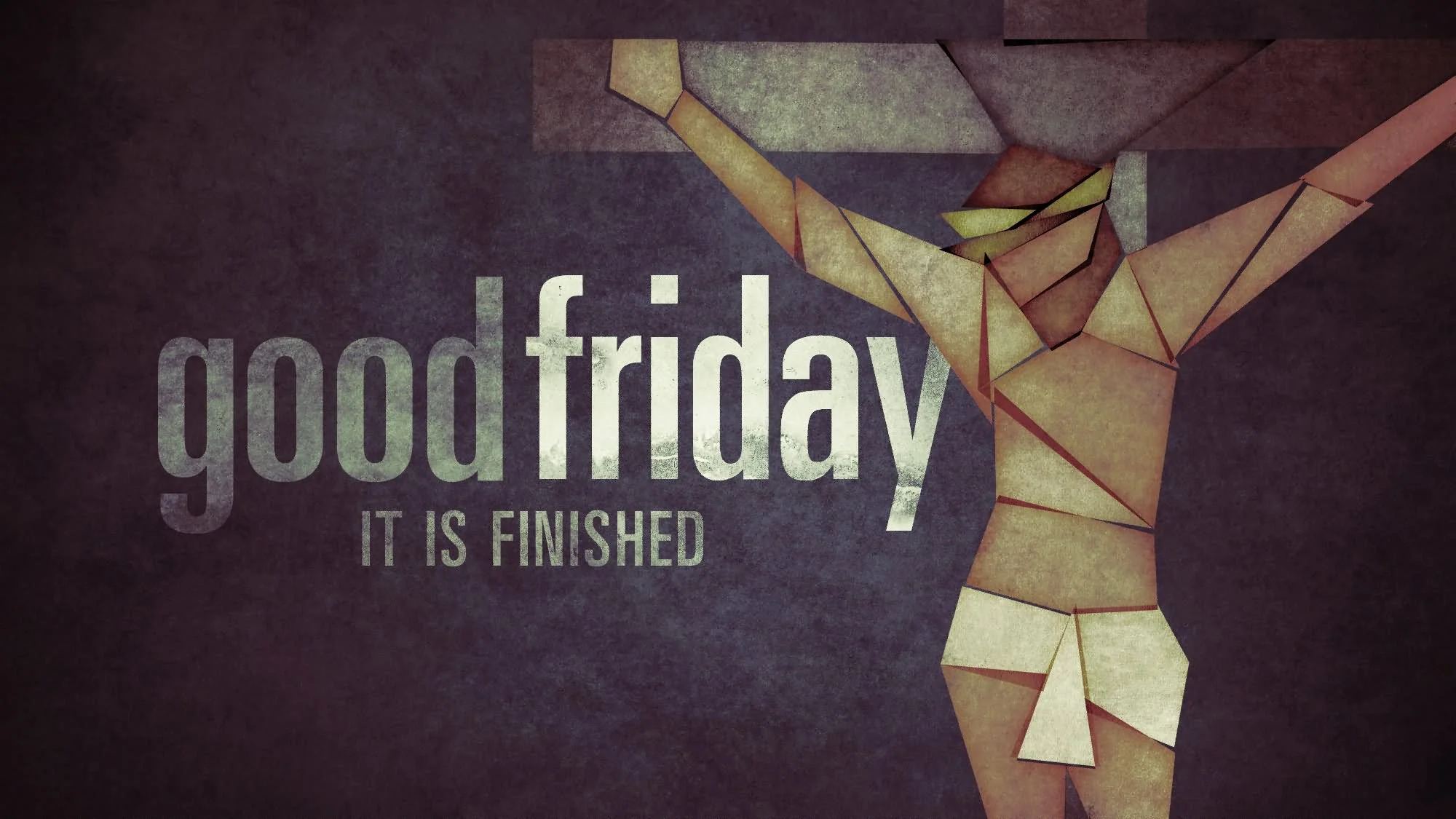
Jesus is put on the cross as King of the Jews. From his exalted position on the cross (John 3:14, 30; 12:32-33), Jesus looks out over his creation and says, “It is finished.” The King of the Jews, the King over all creation, looked out over the brokenness of creation and said, “It’s done. This old creation is finished.” He then gave up his spirit. This is important. No one. NO ONE! Took his spirit from him. He gave it up!
There is a lot you can read today on this Good Friday. If you have more time to sit and read, start in John 15 and read through chapter 20. See how everything flows right up to the cross. Jesus prays for unity and for the whole world to be united as believers. There are so many talking points through this reading but I want to focus my reflections on John 19-20.
Jesus is put on the cross as King of the Jews. From his exalted position on the cross (John 3:14, 30; 12:32-33), Jesus looks out over his creation and says, “It is finished.” The King of the Jews, the King over all creation, looked out over the brokenness of creation and said, “It’s done. This old creation is finished.” He then gave up his spirit. This is important. No one. NO ONE! Took his spirit from him. He gave it up!
What day did Jesus die on? John 19:31 says that it was the day of Preparation for the Sabbath. Sabbath is on Saturday so Jesus died on Friday. What day of creation did Jesus die on? Day six. This was the last day that God created on. Day seven He rested, He took Sabbath. Jesus looks out over the creation and at the end of day six, he says, “It is finished.” He then rested in the tomb on day seven.
Why am I drawing so much attention to the days of creation? John begins his gospel with “In the beginning…” and draws on the Genesis and Exodus narratives. John 1:14, “The Word became flesh and made his dwelling among us” can literally be read, “He tabernacled amongst us.” John begins his gospel with creation imagery to paint that picture in your mind. As you read through the entirety of John’s gospel, you will find six signs:
1 Water to Wine – 2:1-11
2 Healing of the official’s son – 4:46-54
3 Healing of the lame man – 5:1-15
4 Feeding of the multitude – 6:1-15
5 Healing of the man born blind – chapter 9
6 Raising Lazarus from the dead – chapter 11
Why only six? Doesn’t John know that seven is a better number? A holy number? John leaves you searching for a seventh sign. Longing for creation to be completed. Jesus then goes to the cross on day six and says, “it is finished,” and day seven he rests. Chapter 20 begins by pointing out that it is the first day of the week, Sunday, day one of creation. Mary Magdalene discovers the tomb is empty. Through her tears, she sees Jesus for the first time (20:11-16).
One of the most beautiful parts of this story for me is that she mistakes Jesus for the gardener. I believe that John is using this to point to the larger picture of what is going on. Through the Resurrection of Jesus Christ, God is restoring His creation to what He intended it to be. The Garden. The New Creation, the New Garden, needs a New Gardener. Over the last few days I have had you reading the passages where Peter, Paul, and John draw on this New Creation/Garden imagery. Paul even goes as far as to refer to Jesus as the New Adam, the one who brings life, where the old Adam brought death. John, I believe, is pointing to this larger picture. Mary mistakes Jesus as the gardener because through her tears she sees the Gardener in front of her and her tears are wiped away. This is the seventh sign we’ve been longing for, the Resurrection!

Thursday Before Easter - New Heavens and New Earth
“The point of the resurrection…is that the present bodily life is not valueless just because it will die…What you do with your body in the present matters because God has a great future in store for it…What you do in the present—by painting, preaching, singing, sewing, praying, teaching, building hospitals, digging wells, campaigning for justice, writing poems, caring for the needy, loving your neighbor as yourself—will last into God's future. These activities are not simply ways of making the present life a little less beastly, a little more bearable, until the day when we leave it behind altogether. They are part of what we may call building for God's kingdom.”
Take a moment to read 2 Peter 3. There is a good reminder of the grace God shows in His slow coming. The main part I want to focus on today is v10 onward. Is this fire a refining fire? All will be destroyed so that new life can come from it? In verse 13, Peter says we are looking forward to a New Heaven and a New Earth, where righteousness dwells. This is keeping with the promise. When was the last time you heard someone talk about new heavens and new earth as the promise God gave to us? How is this different from the typical view of the afterlife that you often hear?
In our reading of Paul yesterday (1 Cor. 15), we looked at seeds being sown in this life to then be reaped in the next. N.T. Wright, a prominent New Testament scholar, in his book Surprised by Hope, talks about how we should live our life in view of the resurrection, “The point of the resurrection…is that the present bodily life is not valueless just because it will die…What you do with your body in the present matters because God has a great future in store for it…What you do in the present—by painting, preaching, singing, sewing, praying, teaching, building hospitals, digging wells, campaigning for justice, writing poems, caring for the needy, loving your neighbor as yourself—will last into God's future. These activities are not simply ways of making the present life a little less beastly, a little more bearable, until the day when we leave it behind altogether. They are part of what we may call building for God's kingdom.”
God’s mission is to establish His Kingdom here on earth. That was His purpose for the Garden, for Israel, and His mission for the church. This is found in the Lord’s Prayer and is at the core of Christian living taught in the Sermon on the Mount (Matt. 5-7). The Gospels point to God’s Kingdom on earth. Paul and Peter point to the “New Heaven and New Earth” (you can find these teachings in other places in the New Testament). With all of this in mind, let’s take a moment to look at the picture John paints about the next life at the end of Revelation.
Revelation 21:1-10, 22-27; 22:1-5
“Then I saw a new heaven and a new earth” is a reference back to Isaiah 65:17. The prophetic hope was in God restoring His creation (Look back to Isaiah 11). The old order of things has passed away and “there was no longer any sea.” This is an odd saying. I love the sea! In the Jewish worldview though, the sea represented the place where all evil came from. John is proclaiming that evil has no home anymore. Which direction is the New Jerusalem going? What is significant about Jerusalem? The Temple was located there. It is the place where God’s presence was found. Where is God’s presence in this New Jerusalem? Is there a Temple in this New Jerusalem? Why? From the beginning of creation to the end of Revelation, the entire story is about God’s presence being with His people!
John again points to Isaiah (ch25), “There will be no more death or mourning or crying or pain, for the old order of things has passed away.” Immediately after that, the one seated on the throne said, “I am making everything new!” What does this newness look like? Or, going back to my question from Monday, “What would you change about the world to make it perfect?” That’s what Jesus is doing in making everything new!

Wednesday Before Easter - Resurrection
What is the gospel? You have sinned and sin requires death. Christ died to stop God’s wrath from destroying you! Is that the gospel? Yes. Well. Part of it. This is part of the gospel but we have to be careful not to make it the whole gospel. When Paul starts this section of his letter to the church in Corinth (Ch 15), he begins with saying, “I want to remind you of the gospel I preached to you.” He then spends a significant amount of time talking about the resurrection. Jesus’ death on the cross is of vital importance but we have often under emphasized the resurrection. Paul places the resurrection at the center of the gospel.
What is the gospel? You have sinned and sin requires death. Christ died to stop God’s wrath from destroying you! Is that the gospel? Yes. Well. Part of it. This is part of the gospel but we have to be careful not to make it the whole gospel. When Paul starts this section of his letter to the church in Corinth (Ch 15), he begins with saying, “I want to remind you of the gospel I preached to you.” He then spends a significant amount of time talking about the resurrection. Jesus’ death on the cross is of vital importance but we have often under-emphasized the resurrection. Paul places the resurrection at the center of the gospel.
What is “Resurrection”? What part of you resurrects? When Jesus resurrected, was any part of him left in the tomb? If Jesus resurrected in the body, how is this different than resuscitation? If you didn’t watch the video yesterday about heaven and earth, take a moment to look at yesterday’s blog and watch it. The promise in the resurrection of Jesus is a bodily resurrection. The image I always saw in cartoons growing up was a spirit leaving the body, adorned in a robe, with wings, a halo, and playing a harp. How is Jesus’ resurrection different than that? What does this tell us about our resurrection?
Death was the consequence of the sin of Adam and Eve. Death is at the core of the brokenness of this creation. When a baby is born, it is born into this brokenness. Jesus entered this brokenness so that he might conquer it. For God so loved this world, he gave his Son. Paul draws a parallel between Adam, who brought death into the world, and Jesus, the new Adam who brings life. The life you have experienced up to this point is only a glimpse of the true life that you will have in the resurrection!
Death, the last enemy, has been destroyed! Therefore, the life we live today is not one of preservation of this current life but one of planting seeds for the next life. What good you plant in this life, you plant in partnership with the work of God. He will redeem it in the New Creation. All that is sown perishable will be raised imperishable. In receiving the Spirit, you have received the resurrection in part but not fully. Life in the Spirit is a life lived as a signpost pointing to the next life where life is fully lived. Where life is lived as God intended it to be. Where there is no longer any pain, suffering, war, hate, brokenness, and even more so, there will be no more death. Thanks be to God! We have victory through our Lord Jesus Christ!

Tuesday Before Easter - Fully Human
What is a person? The Jewish understanding of a person is the person is created both physical and spiritual. This is contrasted with the Greek understanding (dualism) that a person is fully spiritual and this physical world is a cage that the spiritual needs to be released from (Plato’s philosophy). God created the world perfectly physical and spiritual and called it good.
What is a person? The Jewish understanding of a person is the person is created both physical and spiritual. This is contrasted with the Greek understanding (dualism) that a person is fully spiritual and this physical world is a cage that the spiritual needs to be released from (Plato’s philosophy). God created the world perfectly physical and spiritual and called it good. Plato, and other Greek thinkers, understood the physical world as inherently bad. The true being of something is within it and needs to be released from its physical bondage. This Greek mindset crept its way into Christianity in the first century through what we call Gnosticism (another post for another time). To better understand the glory of Christ’s resurrection, we need to reclaim the Jewish mindset about the person. This is the mindset the Bible was written in. Here’s a video that will help further sort it out. Click Here
With all of this in mind. Read chapter 8 of Romans. You can read it here.
You were made in the Image of God as a fully physical and spiritual being. When sin entered the world, the Image of God was tarnished in us and the Spirit was removed. When we choose the flesh, we reject God giving the Spirit back to us in the Resurrection. Jesus’s death on the cross conquered the death that binds us (1 Corinthians 15…later this week). It is the Spirit that sets us free from the laws of sin and death. Receiving the Spirit begins to move us back to the humanity that God intended for us in the Garden. We were created to be human. Fully human. Physical and Spiritual. When we live in the flesh, we dismiss our sins saying, “I’m only human” but the reality is, “you aren’t human enough.” Strive to be filled with the Spirit in every aspect of your life!
The suffering you feel in this life is only temporary. God has redeemed this creation and has called us to take part in this redemption. Romans 8:22 says that the entire creation is groaning for redemption. The sin that broke our relationship with God also broke the rest of creation. As beautiful as the world is, it is only a glimpse of the beauty God originally created. We too groan inwardly for redemption. Every time I pray with someone who is struggling with cancer, who is dying, who is in severe pain, etc. I long inwardly for the redemption of our bodies, our adoption as Children of God. What is the redemption of our bodies? Is it a disembodies spirit that floats upward to sit on a cloud? Paul, in verse 24, says that it is in this hope we are saved. Our bodies have not been redeemed yet, but we have received the Spirit and we wait for our redemption patiently.
Romans 8 is one of the most powerful chapters in the Bible. It reminds us of God’s intention for us, how we should live, the hope that we have, and eradicates all fears we have as we realize we are more than conquerors when we are in Christ Jesus. You have received the Spirit. You are saved! Now, go live out the Resurrection, a life filled with the Spirit, and show the world what God intended for His creation to look like!

Monday before Easter - Garden of Eden
The prophetic imagination of Isaiah envisions a new world where there is no longer a need for swords or spears (1:4) and where predator and prey will live in harmony together. This prophetic imagination is looking forward to the coming of Christ, the Son of David, who will put the world back to right again under His reign.
Isaiah 2 – The Mountain of the Lord
This is what Isaiah son of Amoz saw concerning Judah and Jerusalem:
2 In the last days
the mountain of the Lord’s temple will be established
as the highest of the mountains;
it will be exalted above the hills,
and all nations will stream to it.
3 Many peoples will come and say,
“Come, let us go up to the mountain of the Lord,
to the temple of the God of Jacob.
He will teach us his ways,
so that we may walk in his paths.”
The law will go out from Zion,
the word of the Lord from Jerusalem.
4 He will judge between the nations
and will settle disputes for many peoples.
They will beat their swords into plowshares
and their spears into pruning hooks.
Nation will not take up sword against nation,
nor will they train for war anymore.
5 Come, descendants of Jacob,
let us walk in the light of the Lord.
Isaiah 11 – The Branch From Jesse
A shoot will come up from the stump of Jesse;
from his roots a Branch will bear fruit.
2 The Spirit of the Lord will rest on him—
the Spirit of wisdom and of understanding,
the Spirit of counsel and of might,
the Spirit of the knowledge and fear of the Lord—
3 and he will delight in the fear of the Lord.
He will not judge by what he sees with his eyes,
or decide by what he hears with his ears;
4 but with righteousness he will judge the needy,
with justice he will give decisions for the poor of the earth.
He will strike the earth with the rod of his mouth;
with the breath of his lips he will slay the wicked.
5 Righteousness will be his belt
and faithfulness the sash around his waist.
6 The wolf will live with the lamb,
the leopard will lie down with the goat,
the calf and the lion and the yearling together;
and a little child will lead them.
7 The cow will feed with the bear,
their young will lie down together,
and the lion will eat straw like the ox.
8 The infant will play near the cobra’s den,
and the young child will put its hand into the viper’s nest.
9 They will neither harm nor destroy
on all my holy mountain,
for the earth will be filled with the knowledge of the Lord
as the waters cover the sea.
10 In that day the Root of Jesse will stand as a banner for the peoples; the nations will rally to him, and his resting place will be glorious.
When I was in Guyana, South America talking with people while they waited in line for a free medical clinic at the church, I asked everyone the same question, “What would you change about the world to make it perfect?” Answers ranged across the spectrum: I’m tired of being sick. I’d get rid of cancer. Can we end poverty? No more hate. No more racism. I’d end all the wars. I’d take away death.
None of these things existed in the Garden of Eden. The Garden was how God intended the world to be but sin brought brokenness, not only humanity’s relationship with God, but also brokenness to the creation itself (Romans 8:22). God has not given up on what He started in this creation. He wants to restore it. He wants to make it new again. He wants to be present to His creation again as He was in the Garden.
The prophetic imagination of Isaiah envisions a new world where there is no longer a need for swords or spears (1:4) and where predator and prey will live in harmony together. This prophetic imagination is looking forward to the coming of Christ, the Son of David, who will put the world back to right again under His reign.
This is what we celebrate in Easter, the Resurrection of Jesus Christ! This week, as we prepare of Easter, prepare your heart, mind, and soul, for the resurrected life we’re called to live. We have not received the Resurrection fully but we live our God’s Resurrection reality while we wait for it patiently. God’s mission for you and for His Church is to live with Resurrection Imagination. We imagine how the world will be in the Resurrection and begin working towards that reality. What does it mean to bring peace to the chaos you see around you? To bring reconciliation to the divides this broken world sets in place? What does it look like to create communities of peace where people recognize the Kingdom of God? This is the mission God has for His Church. We celebrate it in the Resurrection of Jesus Christ. We participate in it in the receiving of Baptism and the Lord’s Supper. We live it out in community that looks and acts differently from the chaotic world around us.