
Good Friday - It Is Finished, The New Gardener
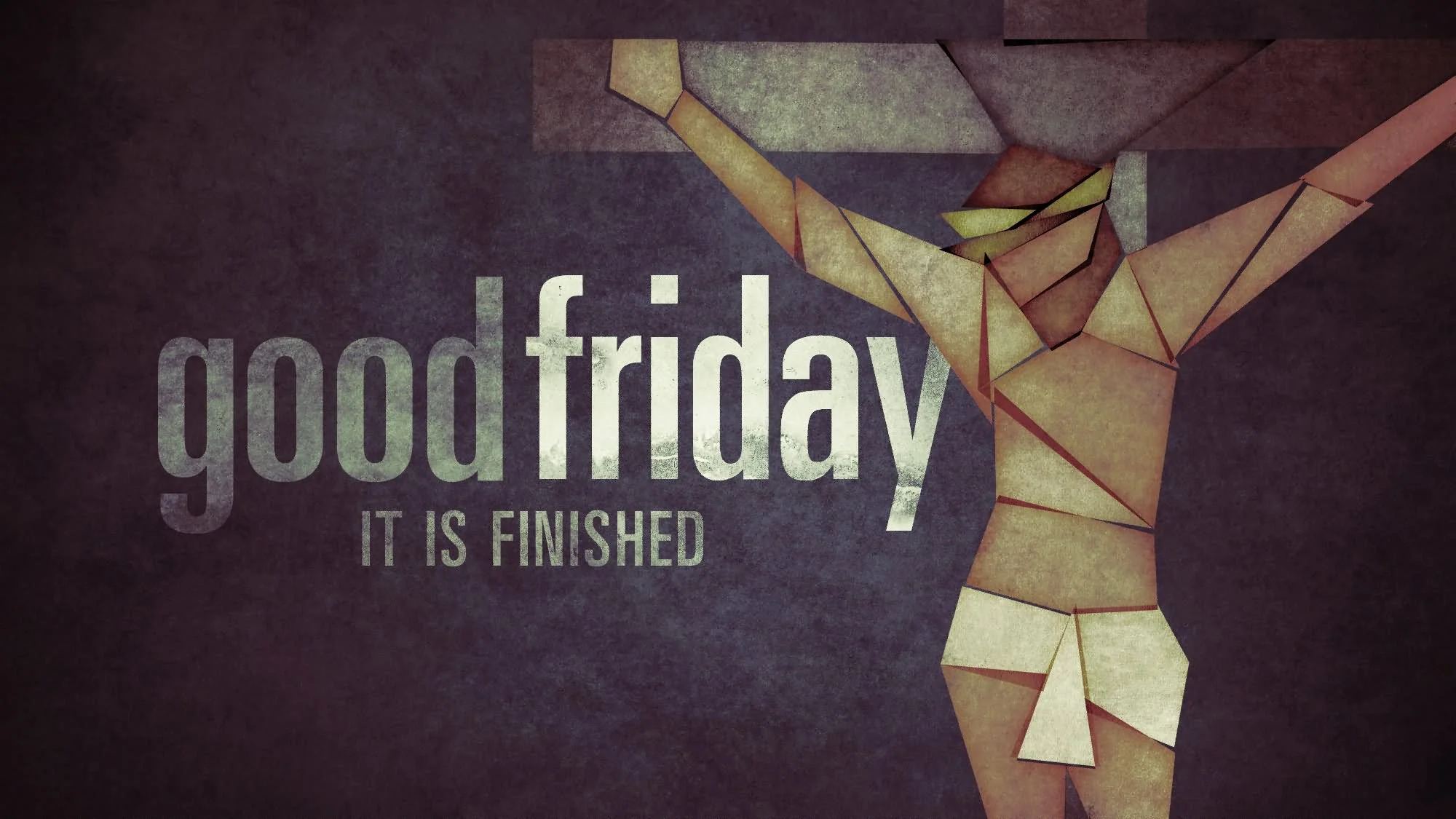
Jesus is put on the cross as King of the Jews. From his exalted position on the cross (John 3:14, 30; 12:32-33), Jesus looks out over his creation and says, “It is finished.” The King of the Jews, the King over all creation, looked out over the brokenness of creation and said, “It’s done. This old creation is finished.” He then gave up his spirit. This is important. No one. NO ONE! Took his spirit from him. He gave it up!
There is a lot you can read today on this Good Friday. If you have more time to sit and read, start in John 15 and read through chapter 20. See how everything flows right up to the cross. Jesus prays for unity and for the whole world to be united as believers. There are so many talking points through this reading but I want to focus my reflections on John 19-20.
Jesus is put on the cross as King of the Jews. From his exalted position on the cross (John 3:14, 30; 12:32-33), Jesus looks out over his creation and says, “It is finished.” The King of the Jews, the King over all creation, looked out over the brokenness of creation and said, “It’s done. This old creation is finished.” He then gave up his spirit. This is important. No one. NO ONE! Took his spirit from him. He gave it up!
What day did Jesus die on? John 19:31 says that it was the day of Preparation for the Sabbath. Sabbath is on Saturday so Jesus died on Friday. What day of creation did Jesus die on? Day six. This was the last day that God created on. Day seven He rested, He took Sabbath. Jesus looks out over the creation and at the end of day six, he says, “It is finished.” He then rested in the tomb on day seven.
Why am I drawing so much attention to the days of creation? John begins his gospel with “In the beginning…” and draws on the Genesis and Exodus narratives. John 1:14, “The Word became flesh and made his dwelling among us” can literally be read, “He tabernacled amongst us.” John begins his gospel with creation imagery to paint that picture in your mind. As you read through the entirety of John’s gospel, you will find six signs:
1 Water to Wine – 2:1-11
2 Healing of the official’s son – 4:46-54
3 Healing of the lame man – 5:1-15
4 Feeding of the multitude – 6:1-15
5 Healing of the man born blind – chapter 9
6 Raising Lazarus from the dead – chapter 11
Why only six? Doesn’t John know that seven is a better number? A holy number? John leaves you searching for a seventh sign. Longing for creation to be completed. Jesus then goes to the cross on day six and says, “it is finished,” and day seven he rests. Chapter 20 begins by pointing out that it is the first day of the week, Sunday, day one of creation. Mary Magdalene discovers the tomb is empty. Through her tears, she sees Jesus for the first time (20:11-16).
One of the most beautiful parts of this story for me is that she mistakes Jesus for the gardener. I believe that John is using this to point to the larger picture of what is going on. Through the Resurrection of Jesus Christ, God is restoring His creation to what He intended it to be. The Garden. The New Creation, the New Garden, needs a New Gardener. Over the last few days I have had you reading the passages where Peter, Paul, and John draw on this New Creation/Garden imagery. Paul even goes as far as to refer to Jesus as the New Adam, the one who brings life, where the old Adam brought death. John, I believe, is pointing to this larger picture. Mary mistakes Jesus as the gardener because through her tears she sees the Gardener in front of her and her tears are wiped away. This is the seventh sign we’ve been longing for, the Resurrection!

Wednesday Before Easter - Resurrection
What is the gospel? You have sinned and sin requires death. Christ died to stop God’s wrath from destroying you! Is that the gospel? Yes. Well. Part of it. This is part of the gospel but we have to be careful not to make it the whole gospel. When Paul starts this section of his letter to the church in Corinth (Ch 15), he begins with saying, “I want to remind you of the gospel I preached to you.” He then spends a significant amount of time talking about the resurrection. Jesus’ death on the cross is of vital importance but we have often under emphasized the resurrection. Paul places the resurrection at the center of the gospel.
What is the gospel? You have sinned and sin requires death. Christ died to stop God’s wrath from destroying you! Is that the gospel? Yes. Well. Part of it. This is part of the gospel but we have to be careful not to make it the whole gospel. When Paul starts this section of his letter to the church in Corinth (Ch 15), he begins with saying, “I want to remind you of the gospel I preached to you.” He then spends a significant amount of time talking about the resurrection. Jesus’ death on the cross is of vital importance but we have often under-emphasized the resurrection. Paul places the resurrection at the center of the gospel.
What is “Resurrection”? What part of you resurrects? When Jesus resurrected, was any part of him left in the tomb? If Jesus resurrected in the body, how is this different than resuscitation? If you didn’t watch the video yesterday about heaven and earth, take a moment to look at yesterday’s blog and watch it. The promise in the resurrection of Jesus is a bodily resurrection. The image I always saw in cartoons growing up was a spirit leaving the body, adorned in a robe, with wings, a halo, and playing a harp. How is Jesus’ resurrection different than that? What does this tell us about our resurrection?
Death was the consequence of the sin of Adam and Eve. Death is at the core of the brokenness of this creation. When a baby is born, it is born into this brokenness. Jesus entered this brokenness so that he might conquer it. For God so loved this world, he gave his Son. Paul draws a parallel between Adam, who brought death into the world, and Jesus, the new Adam who brings life. The life you have experienced up to this point is only a glimpse of the true life that you will have in the resurrection!
Death, the last enemy, has been destroyed! Therefore, the life we live today is not one of preservation of this current life but one of planting seeds for the next life. What good you plant in this life, you plant in partnership with the work of God. He will redeem it in the New Creation. All that is sown perishable will be raised imperishable. In receiving the Spirit, you have received the resurrection in part but not fully. Life in the Spirit is a life lived as a signpost pointing to the next life where life is fully lived. Where life is lived as God intended it to be. Where there is no longer any pain, suffering, war, hate, brokenness, and even more so, there will be no more death. Thanks be to God! We have victory through our Lord Jesus Christ!